When the final medal ceremony concluded in Milano Cortina, the scoreboard read: Norway 39, United States 33, Germany 28. Norway, as it so often does, sat atop the Winter Olympics medal table. But for seventeen exhilarating days, Team USA made the Norwegians sweat.
The Tale of the Tape
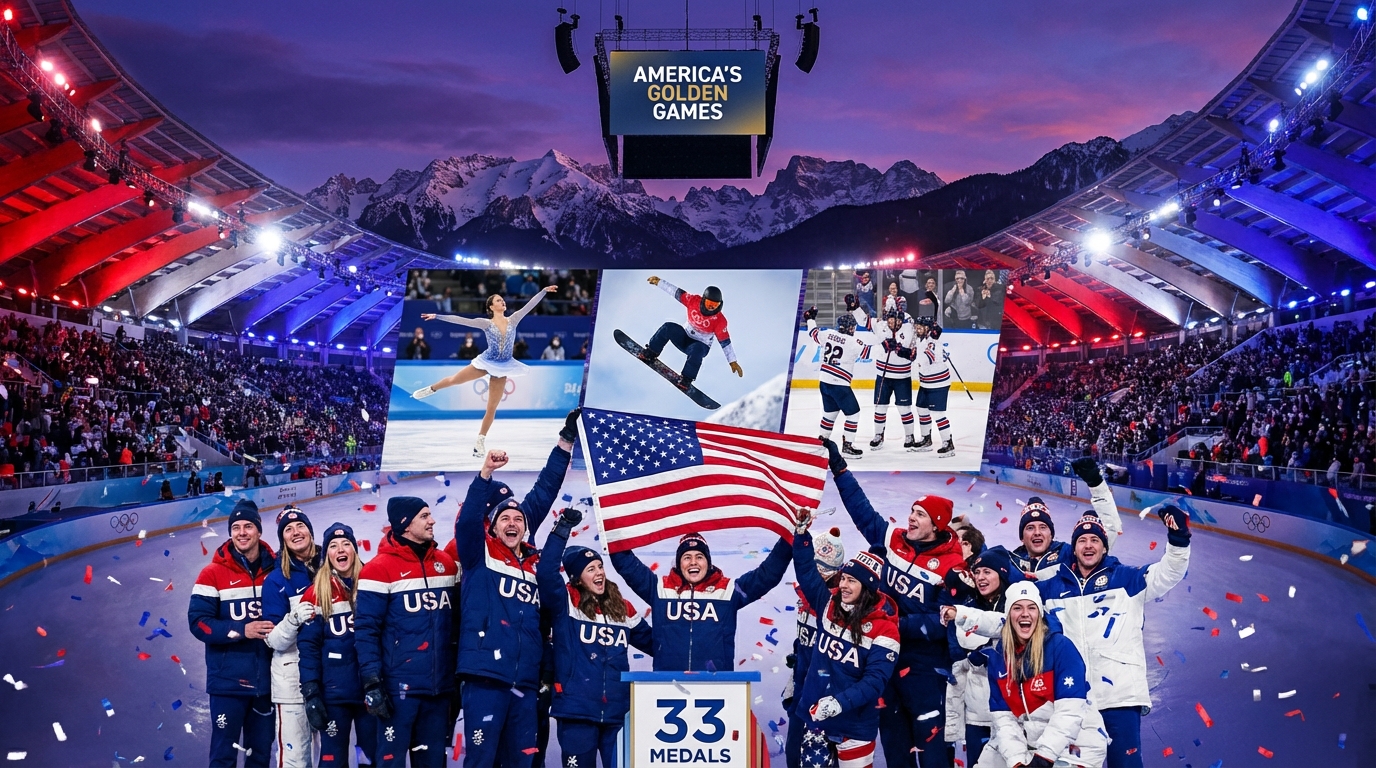
Team USA's final haul — 12 gold, 12 silver, 9 bronze — represented the nation's best Winter Olympics performance since Salt Lake City 2002. The 33 total medals matched the output of a country with unprecedented depth across nearly every winter discipline. From ice to snow, from rinks to mountains, America was a factor everywhere.
Norway's 39 medals came from the familiar playbook: cross-country skiing dominance (11 medals), biathlon excellence (7 medals), and strong showings in Alpine skiing and ski jumping. The Norwegians are built for the Winter Olympics the way Americans are built for the Summer Games — it's cultural, it's institutional, and it's relentless.
But the gap was only six medals. And the story of how America closed that gap — from the double-digit deficits of recent Games to a genuine challenge for the top spot — is one of the great narratives of Milano Cortina.
Where America Won
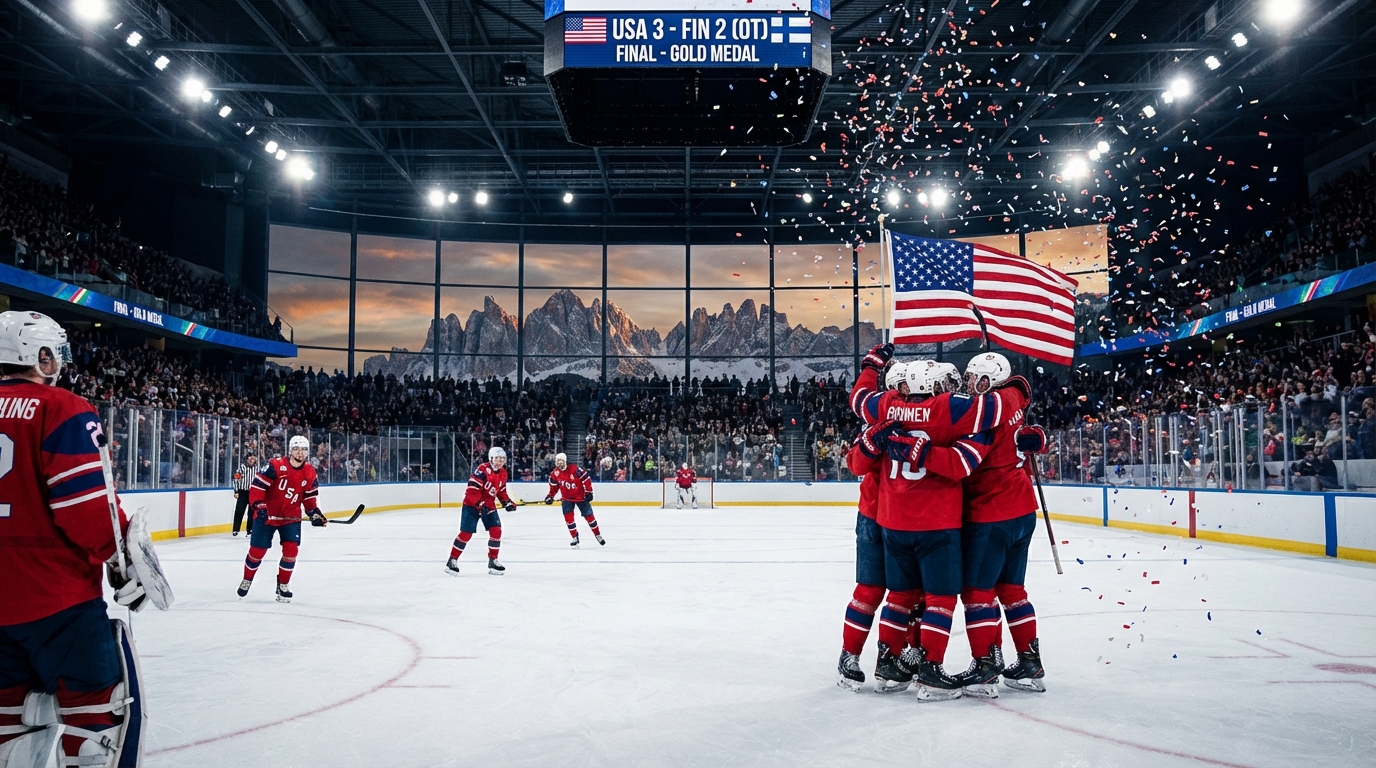
Team USA's gold medals came from a remarkably diverse set of sports. Ice hockey delivered two golds (men's and women's). Speed skating contributed two (Jordan Stolz's 500m and 1000m). Figure skating added two (Alysa Liu's individual and the team event). Alpine skiing produced two (Shiffrin's slalom and Breezy Johnson's downhill). Freestyle skiing accounted for two (Ferreira's halfpipe and mixed team aerials). Bobsled (Meyers Taylor's monobob) and freestyle moguls (Lemley) rounded out the dozen.
That's gold medals in seven different sports. Norway's golds were concentrated in three: cross-country, biathlon, and Alpine. America's breadth was its superpower.
Where Norway Was Untouchable
Cross-country skiing remains the great divide between the United States and Norway in the medal race. Norway won 11 medals in cross-country alone — a number that nearly equals America's total silver medal count. The sport is Norway's national pastime, with a pipeline of talent so deep that their B-team could medal at most World Championships.
Ben Ogden's two silvers and Jessie Diggins's bronze represented historic American achievements in cross-country, but they also illustrated the distance still to be traveled. Three American cross-country medals versus eleven Norwegian ones is not a gap that closes in one Olympic cycle.
Biathlon, similarly, remains a Norwegian stronghold and an American weakness. The combination of cross-country skiing and rifle shooting is wildly popular in Scandinavia and virtually unknown in the United States. Until America develops a serious biathlon program — which would require significant investment in a sport with minimal domestic infrastructure — Norway will always have a medal-count advantage in this discipline.
The Silver Surge
One of the most striking aspects of Team USA's performance was the silver medal count: 12 silvers, tied with the golds for the team lead. Some might view silvers as near-misses, but they're more accurately understood as indicators of competitive depth. A team that wins 12 silvers is a team that was in contention in 24 medal events (assuming some events also produced golds). That's a team knocking on the door everywhere.
Stolz's 1500m silver. Cochran-Siegle's Super-G silver. Ogden's two cross-country silvers. Chock and Bates's ice dance silver. Chloe Kim's halfpipe silver. Each one represented an athlete who was, on that day, among the two best in the world at their event. The silver surge was America's depth made manifest.
Could America Have Won?
The tantalizing question: could Team USA have overtaken Norway for the overall medal lead? The math says it was theoretically possible. Converting three or four of those silvers to golds — or finding additional medals in sports where America was competitive but didn't podium — would have closed the gap. Several events featured American athletes finishing fourth or fifth, agonizingly close to the podium.
But "theoretically possible" and "realistically achievable" are different things. Norway's cross-country and biathlon advantages are structural, not situational. They won't disappear because America wants them to. Overtaking Norway would require either a Norwegian decline in their core sports — unlikely given their developmental pipeline — or an American surge in new medal-producing events.
The Path Forward
Where can America find additional medals? The emerging sports offer intriguing possibilities. Mixed team events — which the IOC continues to add to the program — reward the kind of depth that America possesses. Short track speed skating, where the U.S. has historically been competitive, is ripe for a resurgence. And the continued growth of freestyle skiing and snowboard events provides more opportunities for American athletes who thrive in action sports.
Investment in biathlon and cross-country skiing would be the most direct path to challenging Norway's overall dominance, but the timeline for developing competitive programs in those sports is measured in decades, not quadrennials. The more realistic short-term strategy is to maximize medals in the sports where America already excels — ice sports, snow sports, and Alpine skiing — while building slowly in the Nordic disciplines.
Second in the World
Thirty-three medals. Second overall. The best American Winter Olympics in 24 years. These are not consolation statistics. They are the markers of a winter sports superpower operating at peak capacity.
Team USA didn't catch Norway in Milano Cortina. But they made the chase exciting. They made the Norwegians check the scoreboard. And they established a new baseline for American winter sports excellence that future teams will be measured against.
The medal race isn't over. It's just getting started. And if Milano Cortina proved anything, it's that when America shows up with this kind of depth, this kind of talent, and this kind of hunger, the gap between second and first isn't a canyon. It's a conversation.