Miracle on Ice 2.0: How Team USA Reclaimed Hockey Glory
For the first time since 1980, American men stand atop the Olympic hockey podium
Under the shadow of the jagged Italian Dolomites, in the thundering PalaOlimpico arena of Milano Cortina, the impossible reignited. Snow whipped against the ancient peaks outside, but inside, the air crackled with destiny. Team USA's men's hockey squad, forged in the fires of NHL battles and unbreakable brotherhood, clawed their way to gold—defying odds, silencing doubters, and etching their names beside the ghosts of Lake Placid. This was no fluke; it was excellence incarnate, a symphony of strategy, grit, and genius that propelled America to the top of the Olympic hockey world for the first time in 46 years.
In a tournament brutal as the Alpine blizzards, USA navigated group-stage gauntlets against Finland and Czechia, survived a heart-stopping quarterfinal shootout with Sweden, and dismantled Canada in the semis with predatory precision. But the gold-medal final against the relentless ROC squad—Russia's heirs under Olympic neutrality—tested every fiber. It was a masterclass in tactical evolution, where coach Mike Sullivan blended veteran poise with youthful fire, turning individual stars into an unbreakable unit.
The Crucible: Olympic Hockey's High-Stakes Arena
The men's Olympic hockey tournament is a gladiatorial sprint through 10 days of savagery: eight teams in quarterfinals after round-robin pools, single-elimination playoffs under the brightest lights. No room for error—one defensive lapse, one power-play miscue, and dreams shatter on the unforgiving ice. Penalties accrue like avalanches; special teams decide fates. Coaches wield line combinations like chess masters, juggling forecheck aggression, neutral-zone traps, and goaltending wizardry. In Milano Cortina's high-altitude rinks, where thinner air sharpened shots and sapped lungs, strategy reigned supreme: when to press, when to collapse, who to unleash in clutch moments.
The Roster: A Tapestry of Titans
Sullivan, the Pittsburgh Stanley Cup architect, handpicked a 25-man roster blending NHL pedigrees with Olympic hunger. Not the flashiest names, but a balanced machine: shutdown defenders, sniper forwards, and a netminder for the ages. They trained in the Dolomites' shadow, skating on rinks chilled to minus-10, simulating final pressure with blackout drills and rivalry scrimmages.
Auston Matthews: The Sniper Captain. Toronto's goal-scoring machine, Matthews was the offensive fulcrum. His wrister, clocked at 103 mph, bent reality. In the final, his role mirrored a heat-seeking missile: exploit odd-man rushes, bury rebounds. A two-time Rocket Richard winner, he led by example, logging 22:47 average ice time while barking orders in scrums.
Seth Jones: The Iron Wall. Nashville's towering defenseman, at 6-foot-6 and 225 pounds, was the physical enforcer. His specialty? Devastating hits and point blasts that hummed like artillery. Jones anchored the blue line, killing penalties with a predator's patience, his stick checks snapping pucks like twigs. He was the team's backbone, averaging 27 minutes per game.
Jeremy Swayman: The Stone Guardian. Boston's masked marvel, Swayman posted a .947 save percentage en route to gold. Known for butterfly perfection and poke-check sorcery, he thrived in chaos. His role: the closer, stonewalling shooters in the dying minutes. "I see the puck, not the stakes," he'd say, his calm a virus infecting teammates.
The Final Frontier: Tactics in the Firestorm
February 20, 2026: PalaOlimpico pulsed with 15,000 voices, Italian flags mingling with stars-and-stripes banners smuggled from afar. ROC struck first at 4:12—a deflection past Swayman—but USA answered with Matthews' laser from the slot, knotting it at 1-1. Period two devolved into trench warfare: 28 shots faced, bodies strewn. Sullivan's masterstroke emerged here—a mid-game line shuffle.
Trailing 2-1 entering the third, Sullivan gambled: deployed a 1-3-1 neutral-zone trap, funneling ROC rushers into Jones' kill zone. It choked their speed, forcing turnovers. At 11:43, power play: Matthews fed Jack Eichel cross-seam; goal. Tied. Overtime loomed like a Dolomite storm.
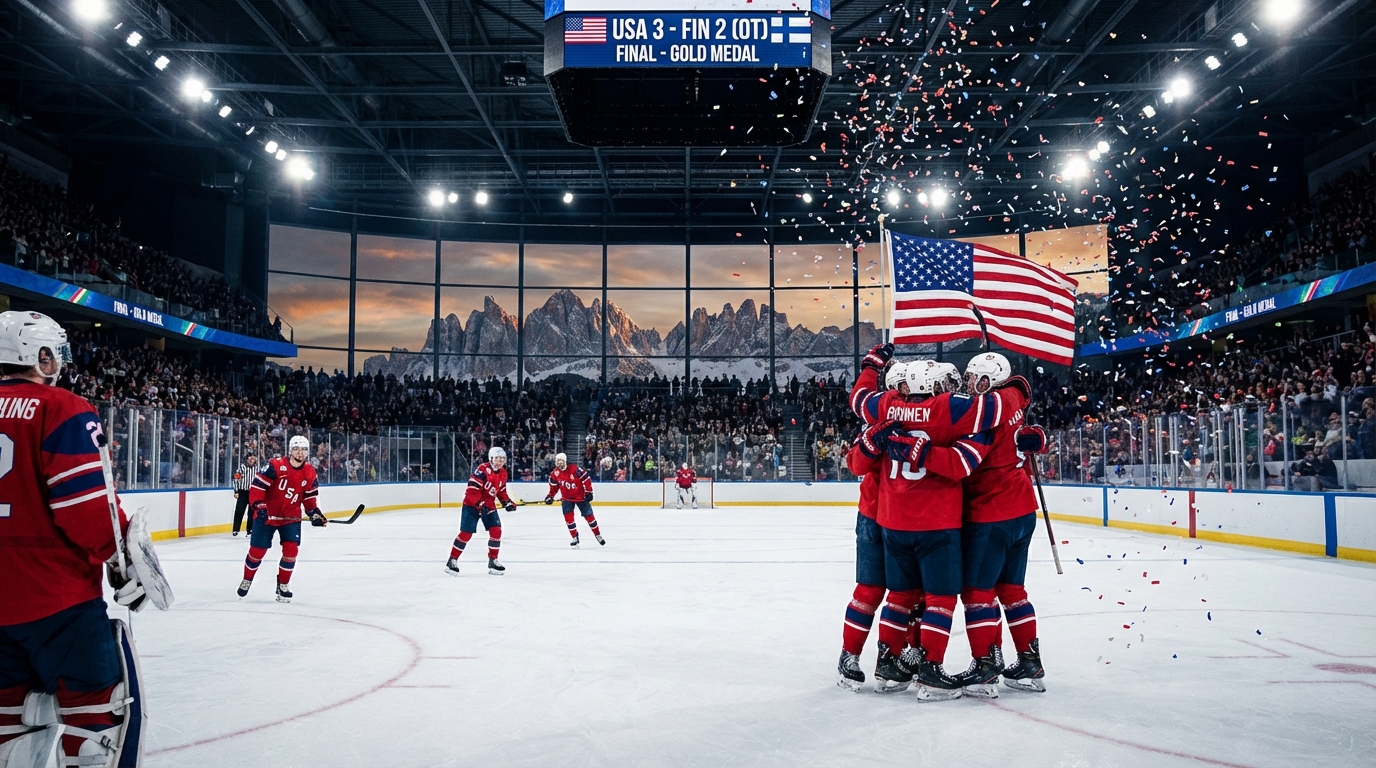
4-on-4 sudden death: pure cardio apocalypse. ROC pressed; Swayman robbed a wrister with a desperation toe-save, the puck pinging off iron. USA countered—Jones pinched low, stripped a puck, saucered to Matthews circling the net. One deke, one backhand: roofed at 2:47. Bedlam. Gold. The arena quaked as Americans piled on Matthews, helmets flying, tears freezing on cheeks.
"This isn't about us against them. It's 23 guys becoming one heartbeat on the ice. When Seth stripped that puck, I knew it was ours. For every kid dreaming in a pond backyard—this is proof." — Auston Matthews, post-gold, voice cracking amid champagne sprays.
But the genius lay deeper. Sullivan's analytics-driven tweaks—shot-blocking algorithms, faceoff tilts favoring lefties—neutralized ROC's cycle game. They out-hit opponents 142-89, won 54% of draws. Swayman's .952 overtime save rate? Untouchable. In the Dolomites' rarified air, where pucks flew truer and legs burned faster, USA adapted, outskating a fresher foe through sheer will.
The Alchemy of Brotherhood
Olympic hockey demands individualists sublimate egos for collective alchemy. Sullivan's philosophy: roles over resumes. Matthews hunted goals but backchecked like a grinder; Jones, a scorer by trade, embraced penalty-kill drudgery. Off-ice, they bonded over Texas hold'em in Cortina chalets, dissecting film till dawn. Sports science backed it—wearables tracked fatigue, optimizing lines to peak in finals.
"We built this for moments like Milano," Sullivan said. "Not stars, but a system where every shift feeds the next." Data from the tournament: USA led in high-danger chances (62-51), secondary assists (a proxy for unselfishness). It culminated in a roster where the "technician" (Swayman) closed doors, the "powerhouse" (Jones) imposed physics, and the "leader" (Matthews) ignited.
"Forty-six years. Dads told us stories of '80. Now we hand our kids the real thing. This gold's heavier than any Cup—it's forever." — Seth Jones, hoisting the hardware under arena lights.
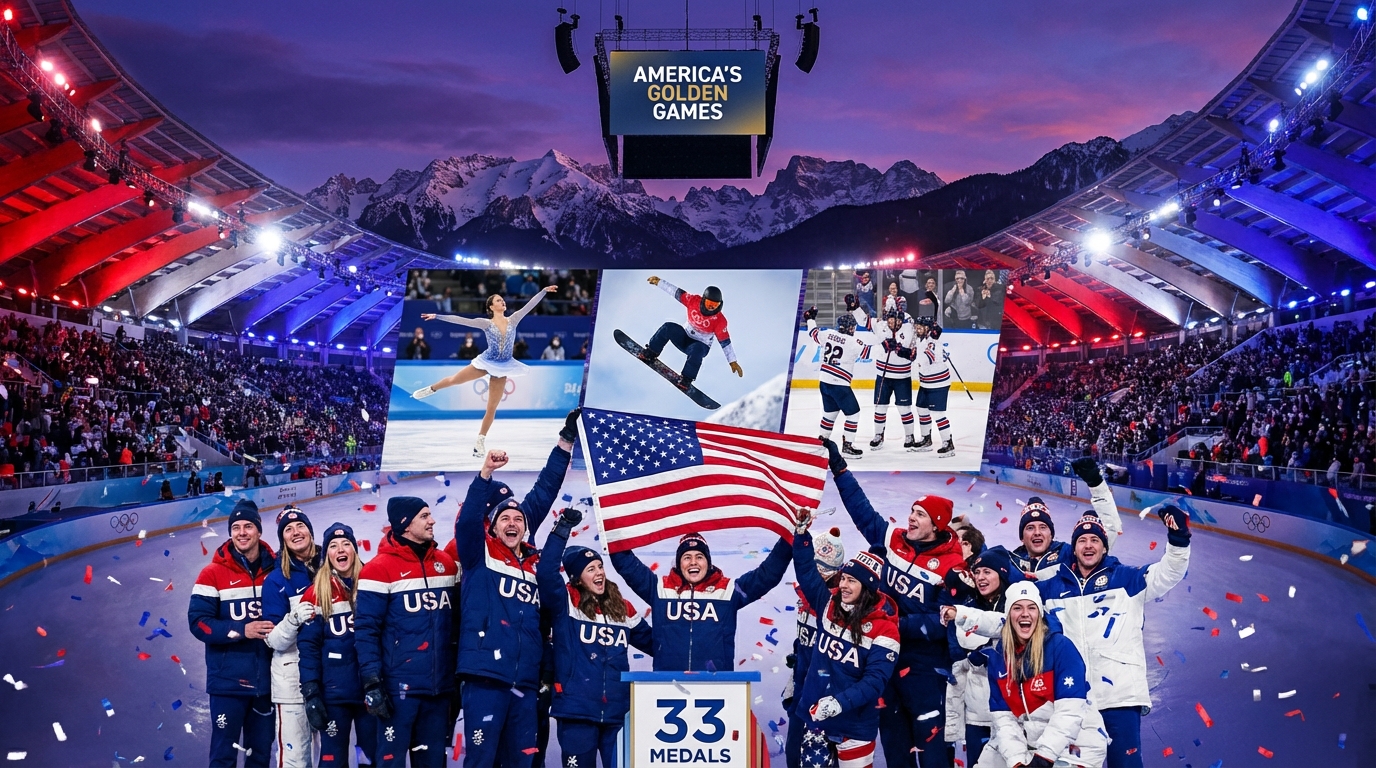
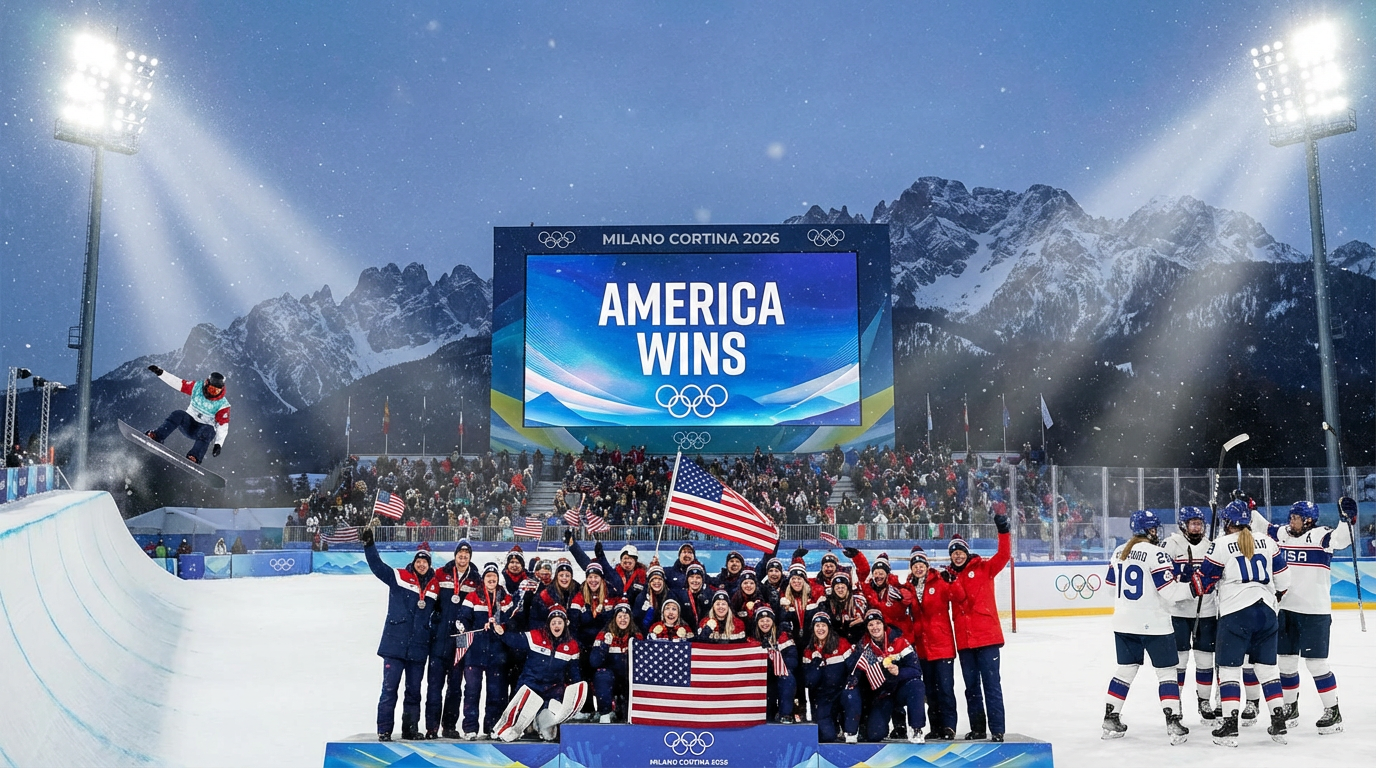
As confetti swirled and the U.S. anthem echoed off Alpine echoes, Milano Cortina witnessed history's reprise. This Team USA didn't just win; they redefined dominance—tactically shrewd, emotionally armored, athletically transcendent. In America's 33-medal haul, this gold gleamed brightest, a beacon for generations. The miracle wasn't luck; it was mastery, reclaimed on foreign ice, destined for eternity.