Why America Wins: The Infrastructure of Exceptionalism
Behind every medal is a system built to produce champions
In the shadow of the Italian Dolomites' towering pinnacles, where the Milano Cortina air bites like a champion's resolve, freestyle aerials unfolds as humanity's defiant dance with gravity. One ramp. One athlete. Three heart-stopping seconds of inverted flight—flips twisting into somersaults that mock the earth's pull. Yet at the 2026 Winter Olympics, the mixed team aerials event transformed this solo symphony into a high-stakes chess match. And Team USA, with surgical precision, checkmated the world to claim gold, etching another chapter in their 33-medal masterpiece.
This triumph was no fluke of talent alone. It sprang from America's infrastructure of exceptionalism: a relentless machine of coaching mastery, data-driven selection, psychological fortitude, and facilities forged in the fires of ambition. From the high-tech ramps of Park City to the pressure simulators in Lake Placid, every element converges to produce not just athletes, but unbreakable units. In Cortina's Alpine crucible, Ashley Caldwell, Chris Lillis, and Justin Schoenefeld embodied this system, turning individual brilliance into collective dominance.
The Arena of Audacity: Decoding Mixed Team Aerials
Picture the scene: Cortina's Freestyle Arena nestles against limestone cliffs dusted in powder, floodlights carving golden beams through twilight mist. Four teams per round, three athletes each—minimum one woman, one man—launch sequentially. Scores fuse into a team total, where a single wobble cascades into catastrophe. No safety nets. No do-overs. One slip, and gold evaporates like breath on frozen glass.
Strategy ignites the drama. Jumps carry Degree of Difficulty (DD) ratings—simpler ones promise reliability but cap rewards; monsters like quad-twisting triples tempt fate with glory. Coaches toggle these round-by-round, weighing risk against rivals' tendencies. Athlete order seals the gambit: anchor with the rock? Lead with the explosive force? In the Dolomites' roar, U.S. head coach Todd Schlein orchestrated these calls like a conductor wielding lightning.
"It's poker with your life on the line," Schlein said post-medal, his voice gravel from endless nights charting trajectories. "One read wrong, and you're folding to the world."
The Architects' Blueprint: Forging the Perfect Trio
America's system doesn't chase raw rankings; it engineers synergy. Schlein's staff pored over years of data from the U.S. Aerials Center in Park City—wind tunnel sessions, biomechanical scans, mental reps under VR simulations mimicking Olympic roar. They bypassed solo stars for a balanced triad: Caldwell's veteran firepower, Lillis's raw detonation, Schoenefeld's unyielding precision.
Ashley Caldwell: The Unyielding Anchor. A three-time Olympian whose full-full-full (FFF)—three flips, three twists—has headlined X Games posters, Caldwell arrived in Milano Cortina as the campaign's seasoned general. At 32, her body bore the scars of a decade's battles: knees rebuilt, spirit tempered. Yet on that ramp, she was poetry in motion, launching 15 meters into Dolomite skies, body coiled like a spring uncoiling fury. Her role: deliver the DD dagger, scoring 130-plus to shift momentum.
"I've flipped for crowds of thousands," Caldwell reflected, eyes distant as if replaying the in-run. "But for this team? It's flips for family."
Chris Lillis: The Thunderbolt. At 26, Lillis exploded onto the scene from Michigan's backcountry jumps, his quad-twisting triple flip (one flip, four twists) boasting the sport's highest DD. Built like a snowboarder who traded boards for air, his takeoff unleashes torque that rivals jet propulsion. In team format, he was the disruptor—pressuring foes into overreaching. Training logs showed 800 jumps per season, each dissected by AI for micro-adjustments.
Justin Schoenefeld: The Ice-Cold Closer. The 24-year-old technician from Wisconsin farms precision like a watchmaker. His double-full double (DFD) sacrifices raw DD for execution perfection—scores cresting 140 on form alone. In Lake Placid's high-altitude chambers, he logged 20,000 mental reps, emerging as the system's crown jewel: unflappable under spotlights, landing with surgical finality.
This trio wasn't random. U.S. Ski & Snowboard's "Team Synergy Matrix"—a proprietary algorithm blending physical metrics, psych profiles, and sim data—flagged them as optimal. It's the same blueprint powering golds in moguls, halfpipe, and alpine: select for the event, not the ego.
Climax in the Clouds: The Super Final Unfolds
Snow swirled like confetti in Cortina's Super Final, four teams whittled to elites under stadium lights reflecting off sheer granite faces. China led seeding, their machine-like squad hungry for repeat glory. Team USA, second, huddled in the athlete tent—Schlein's whiteboard smeared with contingencies: "Safe opener. DD hammer. Lockdown close."
Lillis drew first blood, jumping lead. Ditching his quad beast for a triple-twisting triple—DD 4.525, consistency king—he knifed off the ramp. Twists blurred into a corkscrew vortex, landing telemark-stuck, snow exploding in crystalline shards. Score: 132.4. China countered solidly but trailed. Pressure mounted like an avalanche.
Caldwell mounted next, wind whispering omens across the knoll. She'd watched China's woman graze snow on hands—vital deduction. "Clean beats perfect," her coach radioed. Caldwell surged, ponytail whipping, FFF uncoiling mid-air: three rotations defying physics, body arrow-straight into powder. Judges flashed 137.2. USA surged ahead. The crowd—20,000 strong, Stars and Stripes piercing the night—erupted.
"That moment atop the in-run? The Dolomites framed eternity. But I saw Chris and Justin's faces. Gold wasn't mine—it was ours." — Ashley Caldwell
Schoenefeld faced Armageddon: China last, their phenom faltering on a shaky telemark. A clean DFD seals it. He exhaled frost, visualized 10,000 times in Utah's altitude dome. Takeoff pure, twists metronomic, landing fused to earth. 141.1. Final tally: USA 410.7, China 402.3. Gold. The anthem swelled as medals draped necks, tears freezing on cheeks amid Dolomite echoes.
The Unseen Engine: America's Medal Factory
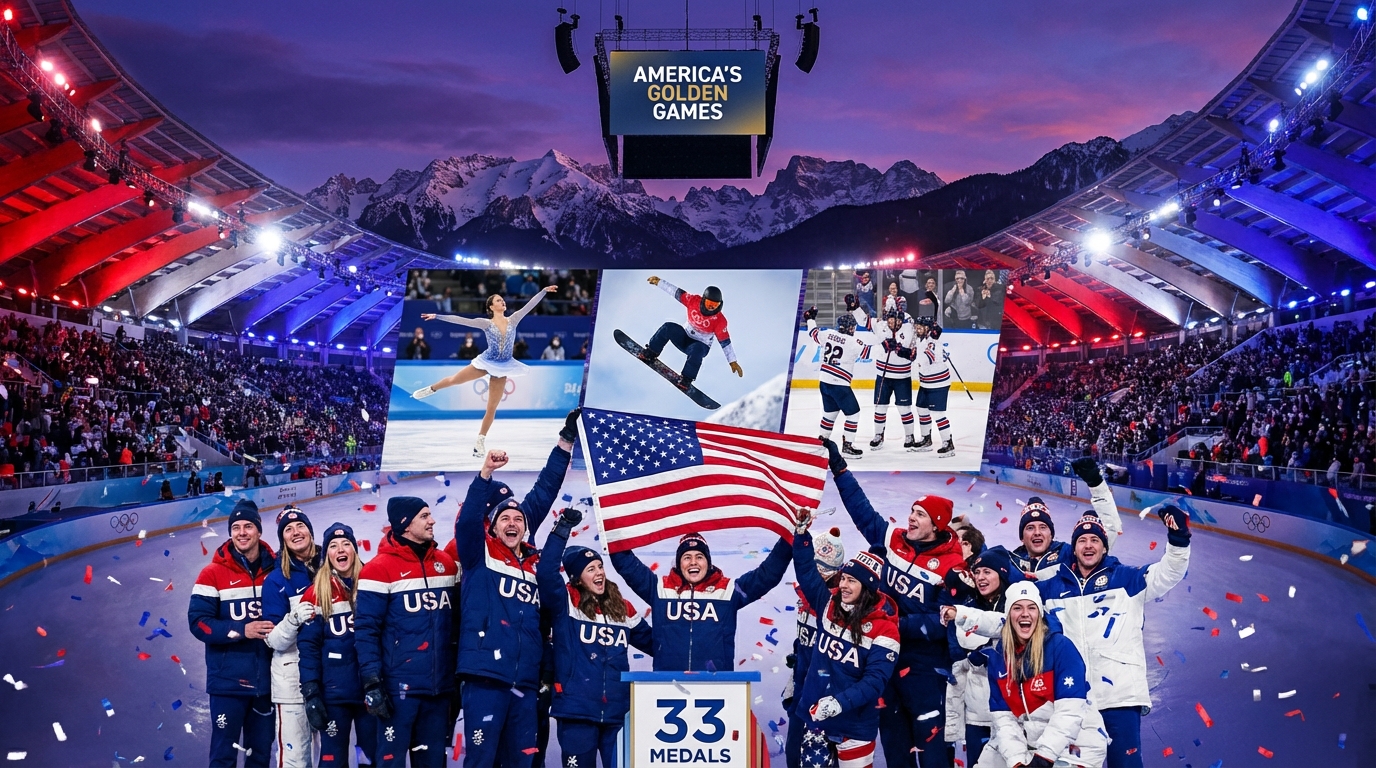
This gold exemplifies the infrastructure propelling 33 medals—most ever for Team USA. U.S. Ski & Snowboard invests $50 million annually in 12 high-performance centers: Park City's aerial ponds simulate Cortina snow; Steamboat Springs' water ramps hone tricks sans injury. Youth pipelines funnel 15,000 kids through 200 clubs, data-tracking from age 8.
Coaching? Elite cadre, 40% Olympians themselves, armed with PhDs in biomechanics. Psychologists embed via "Unit Cohesion Camps," morphing individualists into units—as in aerials, where Caldwell's leadership fused Lillis's fire and Schoenefeld's steel. Tactical sims predicted China's moves; adaptability crushed them.
Compare to rivals: China's state mills produce technicians; France favors flair. America blends both, plus innovation—cryo-chambers, nootropic protocols, AI-optimized nutrition. In big air, Eileen Gu's silver bowed to USA bronze via bolder lines; alpine slalom saw Mikaela Shiffrin's tactical masterclass echo aerials' risk calculus.
- 33 medals: 14 gold. Freestyle: 10. Alpine: 7. Snowboard: 9.
- Youth investment: 5,000 scholarships, birthing stars like Schoenefeld.
- Tech edge: Drones map wind; wearables track form in real-time.
"We don't win because we're American," Schlein said, gripping his team's flag. "We win because we build systems that chase excellence, wherever the mountain rises." In Milano Cortina's eternal snows, that system shone—proof America's infrastructure doesn't just compete. It conquers.