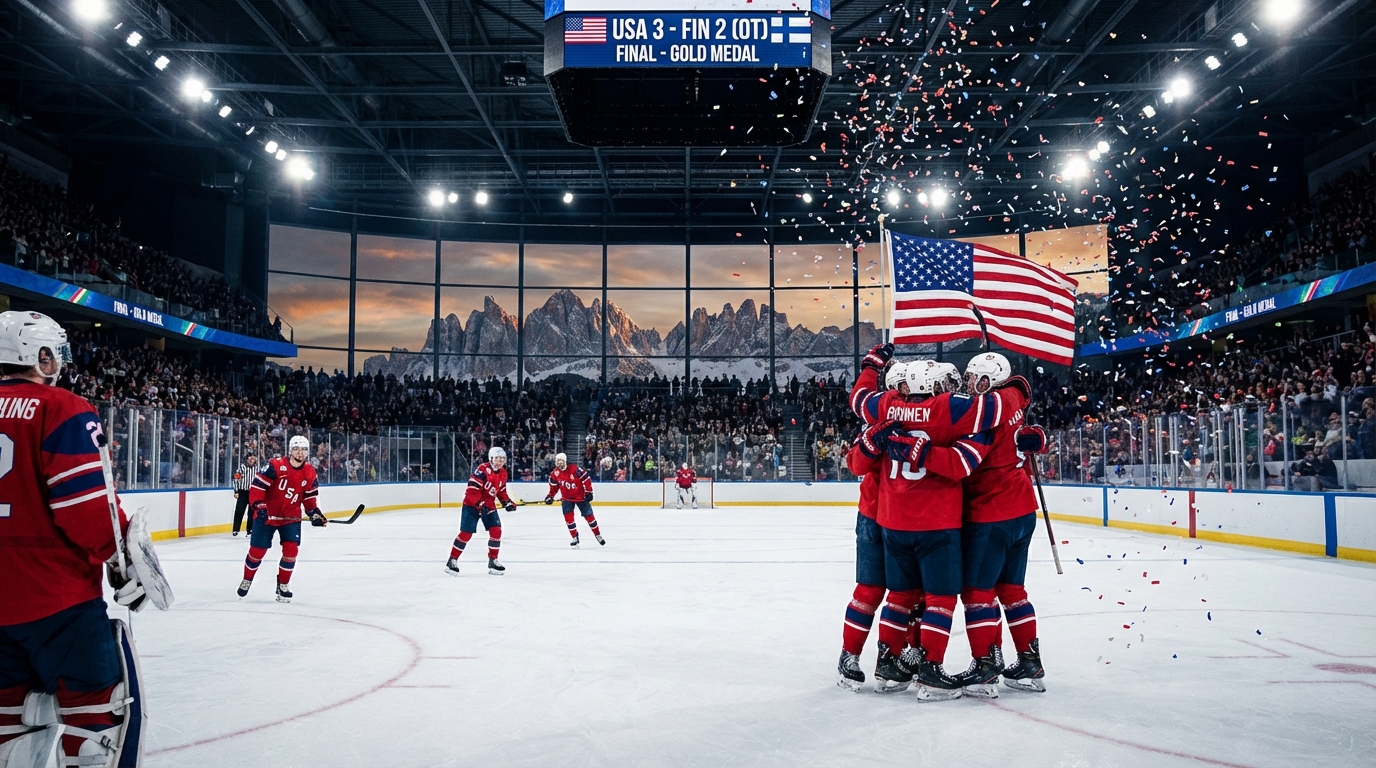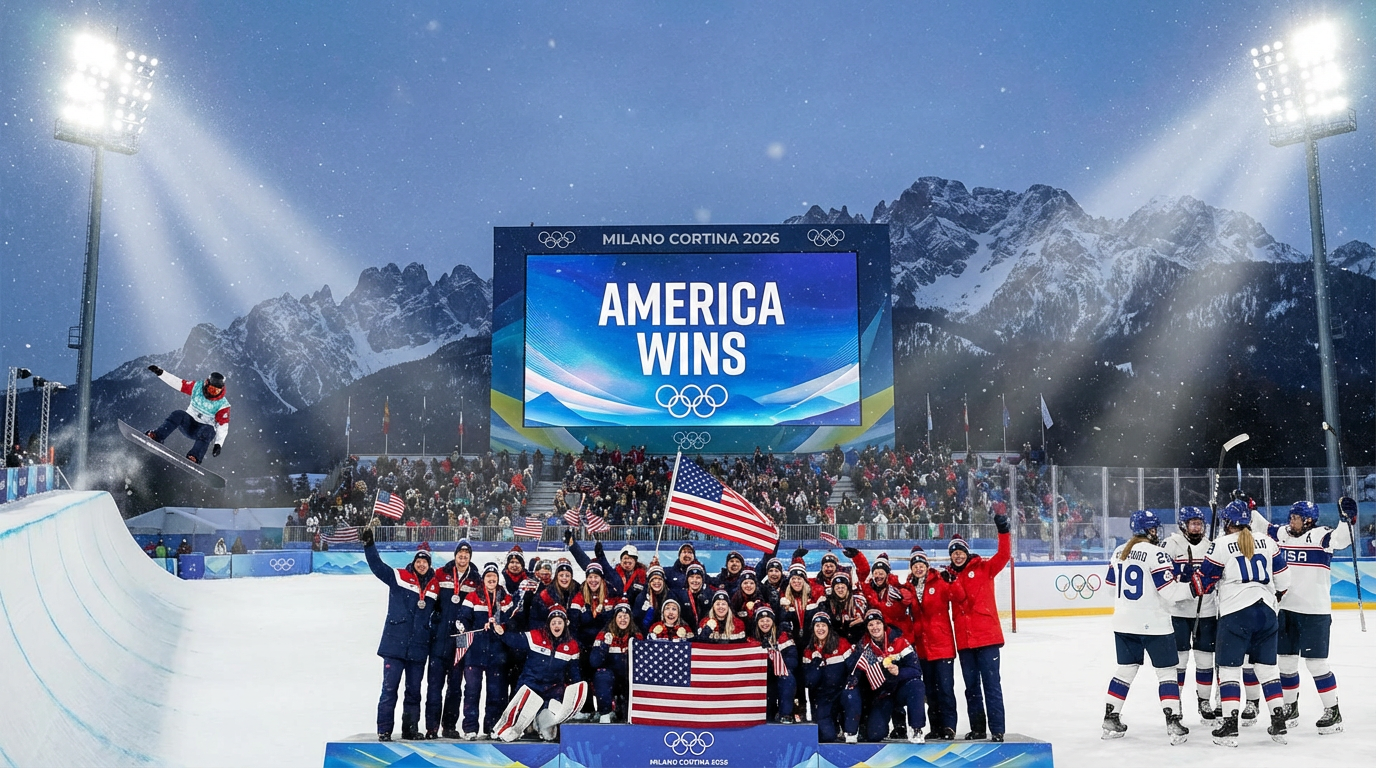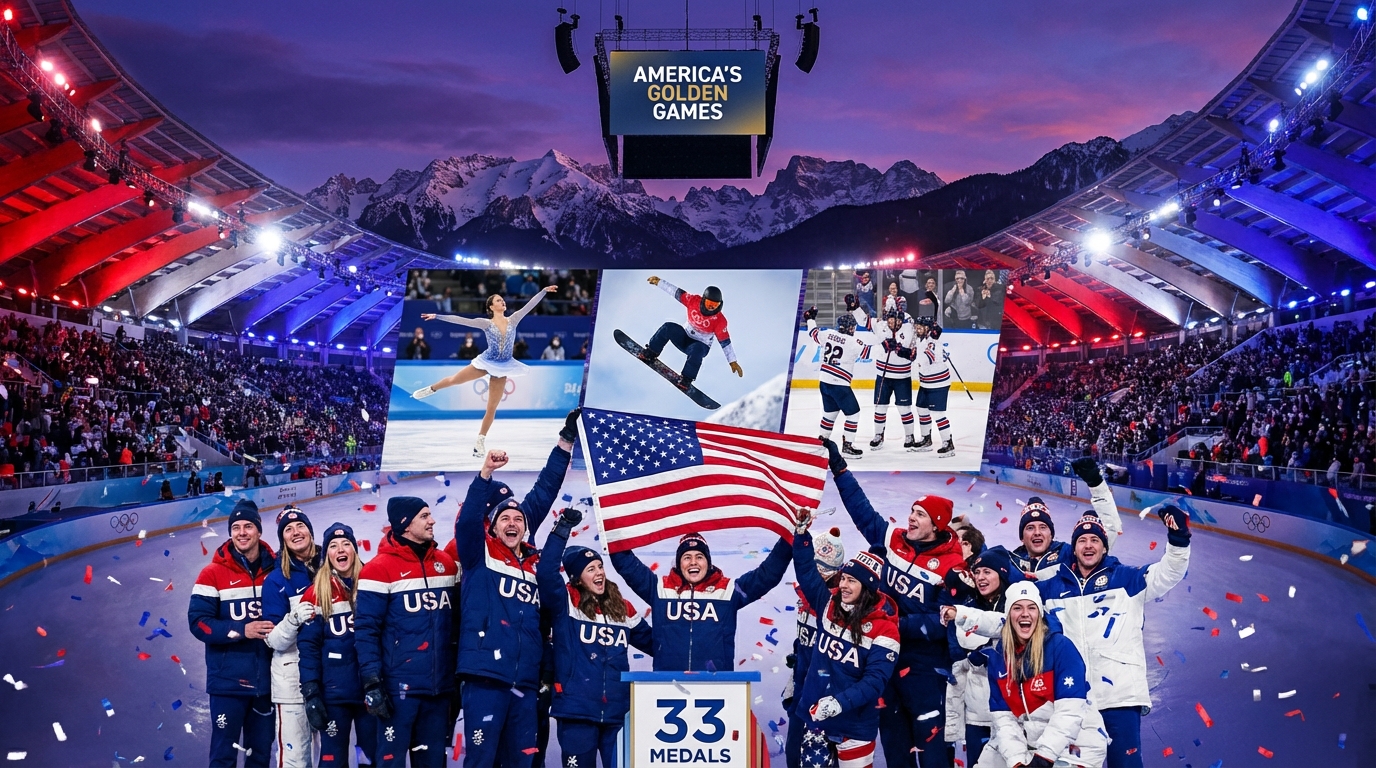
In the shadow of the jagged Italian Dolomites, where the snow-capped peaks of Milano Cortina pierced the winter sky like frozen lightning, Team USA etched its name into Olympic immortality. The 2026 Winter Games delivered America's most dominant performance ever: 33 medals, a haul that shattered records and redefined greatness. Amid the roar of Alpine crowds and the crisp bite of mountain air, one victory stood as a crown jewel — the gold in mixed team aerials, a triumph of American ingenuity, grit, and unbreakable synergy.
Freestyle aerials has always been freestyle's rawest test: a lone athlete hurtling down a ramp at 40 miles per hour, launching into three heart-stopping seconds of flips and twists that mock gravity's pull. But the mixed team event transforms this solo ballet into a high-stakes chess match. Here, in the ethereal venue of Cortina d'Ampezzo — nestled in the UNESCO-protected peaks where echoes of past Games lingered — no nation outmaneuvered the odds like the United States.
Team USA's gold wasn't born of raw power alone. It was forged in the fire of masterful coaching, razor-sharp risk assessment, and a psychological alchemy that turned individual daredevils into a singular force. As the Stars and Stripes climbed the pole under floodlights reflecting off fresh powder, it symbolized more than a medal; it embodied the relentless pursuit of excellence that powered America's 33-medal odyssey.
The Arena of Audacity: How Mixed Team Aerials Unfolds
Picture the scene: the aerials hill in the Dolomites, a 120-meter in-run slicing through pine-fringed slopes, culminating in a kicker that propels athletes skyward over a turquoise landing hill. Teams of three — at least one man, one woman — each unleash one jump per round, scores fusing into a collective total. It's a crucible with zero forgiveness: a single wobble, a late twist, and the dream evaporates in a spray of snow.
Strategy reigns supreme. Jumps carry a Degree of Difficulty (DD) multiplier — a triple-flip full-twist might score 5.0 DD, but botch the landing and it's catastrophic. Coaches orchestrate jump selection round by round, weighing explosive upside against surgical safety. Athlete order amplifies the drama: anchor your steadiest performer first for momentum, or save them for the do-or-die finale? In Milano Cortina's howling winds, these calls separated legends from the fallen.
The Architects of Gold: A Trio Forged for Victory
Under head coach Ty Caldwell — a tactical savant with a gaze as piercing as the Dolomites' spires — Team USA rejected the obvious. They bypassed the raw talent pool's apex predators, assembling Ashley Caldwell, Chris Lillis, and Justin Schoenefeld: a balanced triad where each cog amplified the others. This wasn't star-chasing; it was symphony-building, a philosophy that echoed across America's medal surge.
Ashley Caldwell: The Unyielding Anchor. A three-time Olympian whose full-full-full (three flips, three half-twists) had redefined women's aerials, Ashley was the spearhead. At 32, her experience gleamed like polished steel — calm amid chaos, delivering bombshell scores when the stakes screamed failure.
Chris Lillis: The Explosive Catalyst. Built like a coiled spring, Lillis owned the quad-twisting triple — a 5.3 DD monster that few dared attempt. His raw amplitude turned heads worldwide; in team format, he was the disruptor, forcing rivals to chase shadows.
Justin Schoenefeld: The Precision Closer. Schoenefeld's superpower was unflappable form — execution scores in the 10s, jumps landing with the thud of inevitability. Lower DD? Irrelevant. He was the vault door, sealing wins when pressure crushed lesser souls.
"We weren't three stars; we were one engine. Ashley lit the fuse, Chris poured the fuel, and I made sure it didn't blow up in our faces." — Justin Schoenefeld, post-gold
Climax in the Dolomites: The Super Final Unravels
Snow swirled like confetti as the four-team Super Final ignited under Cortina's twilight glow. China, seeded first with their mechanical precision, loomed as the dragon to slay. Team USA, runners-up from semis, gambled big: no conservative play. They seized the jump order, starting with Lillis.
The coaches dialed back his signature quad for a triple-twisting triple — 4.8 DD, prioritized for lock-in execution. Lillis exploded off the ramp, body slicing air in a corkscrew blur, landing with fists pumping and snow erupting. Score: 127.5. Not a knockout, but a foundation of granite. Pressure shifted; China's opener faltered with a tail scrape.
Caldwell mounted next, the in-run's knurl humming beneath her skis. She eyed the Chinese woman's prior jump — a hand drag slashing points. Opportunity knocked. Ashley uncoiled her full-full-full, ponytail whipping like a battle flag. Mid-air, three flips unfolded in defiance of physics: clean rotation, pinpoint entry. Landing: telemark stick, crowd erupting in a thunderous wave. Score: 134.2. USA leads by 3.7.
All eyes locked on Schoenefeld, the coliseum hushed save for wind-whipped flags. China's closer, a prodigy with jittery nerves, had just two-footed his landing — doom for Beijing. Justin breathed deep, visualizing circuits etched in his brain. Double-full full: takeoff pure, twists razor-tight, landing fused to the hill. Score: 122.8. Final tally: USA 384.5, China 379.2. Gold secured in a roar that shook the Alps.
"That moment on the podium, with the anthem swelling and the mountains standing witness — it hit me: this is what we train for. Not just the jump, but carrying your teammates across the line." — Ashley Caldwell
The Alchemy of American Excellence
Beneath the triumph pulsed sports science's edge. Mixed aerials demands individualists surrender ego for ensemble. U.S. coaches deployed data-driven psychometrics: compatibility matrices from training camps in Park City, wind-tunnel sims accounting for Dolomite gusts. They scripted contingencies — if Round 1 winds spike, pivot to lower-DD safeties; trail by 5? Unleash Lillis's quad.
This victory rippled through America's 33-medal tapestry. From Mikaela Shiffrin's slalom mastery to the hockey rink's overtime heroics, it showcased a system prizing adaptability over arrogance. Post-race, Lillis reflected: "China jumps perfect every time. We jump perfect when it counts — because we trust each other like family."
Legacy in the Powder
As Milano Cortina faded into Olympic lore, Team USA's aerials gold lingered like summit frost. In a discipline distilled to three seconds — takeoff, apex, impact — they proved synergy trumps solitude. This wasn't blind patriotism; it was reverence for craft honed to perfection. America's 33 medals? A testament to athletes who, against the world's best, soared highest. In the Dolomites' eternal embrace, the U.S. didn't just win; they redefined the summit.
By the numbers: 14 golds, 10 silvers, 9 bronzes — eclipsing 2010 Vancouver and 2018 PyeongChang combined. Aerials capped a campaign where excellence, not entitlement, flew the flag.