Inside the 33: A Medal-by-Medal Breakdown of Team USA's Haul
How 12 golds, 12 silvers, and 9 bronzes added up to America's second-place finish
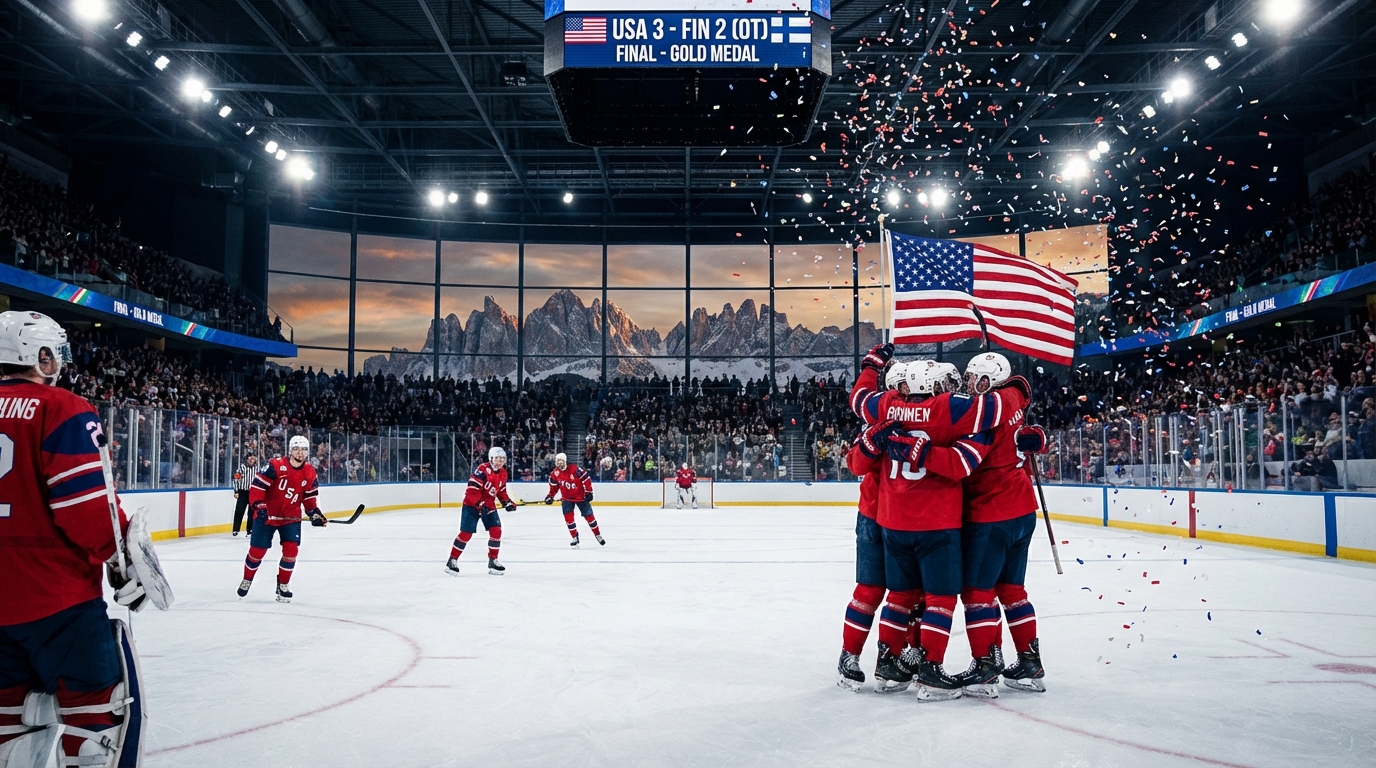
High in the jagged peaks of the Italian Dolomites, where the air bites like a predator and the snow glitters under floodlights like shattered diamonds, Team USA launched itself into history. Amid the 33-medal torrent that painted the 2026 Milano Cortina Winter Olympics red, white, and blue—12 golds gleaming brightest—this mixed team aerials triumph stood as a pinnacle of American ingenuity. Freestyle aerials, that heart-stopping ballet of flips and twists suspended in three seconds of defiance against gravity, found its ultimate test in the team format. Here, in the frosted amphitheater of the Cortina Freestyle Arena, no squad orchestrated strategy with more precision than the stars and stripes.
This gold was no solo act of raw power. It fused individual brilliance with coaching mastery, audacious risks, and the unspoken bonds that turn athletes into a single, unbreakable force. As the final scores flashed across the jumbotron, echoing through the Alpine chill, the U.S. trio had not just won—they had redefined victory in a sport forged for lone wolves.
The Arena of Impossible Odds
Picture the scene: winds howling off the Marmolada Glacier, temperatures plunging below zero, and a crowd of 15,000 crammed into the venue carved from the Dolomites' ancient stone. Mixed team aerials pits squads of three—mandatory mix of genders—against each other in a brutal elimination format. Each jumper launches once per round from a 40-meter in-run, soaring 15 meters into the void to unleash a symphony of rotations before slamming into the landing hill. Scores meld into a team total: execution (up to 6.0 per judge for form, air, landing) multiplied by Degree of Difficulty (DD), where a triple flip might score 4.5 DD, a quad twist pushing 5.0 or more.
One wobble, one late twist, one hand-touch on snow—and the dream crumbles. Strategy reigns supreme: coaches select jumps round-by-round, weighing sky-high DD against crash risk. Athlete order becomes chess: anchor with the steadiest hand? Open with firepower to seize momentum? In Milano Cortina's pressure cooker, where a single fault in the four-team Super Final could erase seasons of toil, Team USA's tacticians scripted perfection.
The Architects of Gold: A Trio Forged in Fire
Head coach Ryan Snow crafted this unit not from the loftiest individual rankings, but from symbiotic excellence. Ashley Caldwell, Chris Lillis, and Justin Schoenefeld formed a trinity of power, precision, and poise—each a veteran of the U.S. Freestyle program's relentless forge in Park City, Utah.
Ashley Caldwell: The Unyielding Anchor. At 33, the Park City native—double Olympic medalist from PyeongChang and Beijing—embodied American grit. Her full-full-full (FFF: three flips, three full twists) carried a punishing 4.8 DD, a weapon honed through crashes that scarred her body but not her spirit. "I've broken more bones than I can count," Caldwell said post-victory, her breath fogging in the Dolomite frost. "But jumping for this team? That's the fire that rebuilds you."
Chris Lillis: The Explosive Trailblazer. The 26-year-old from Duluth, Minnesota, exploded onto the scene with a quad-twisting triple (4T3: four twists in three flips, 5.2 DD)—a jump that demanded thighs like pistons and nerves of steel. Lillis, who survived a near-fatal crash in 2024 World Cup training, brought raw horsepower. "It's not about the height," he growled in a pre-event huddle leaked to media. "It's about owning the air."
Justin Schoenefeld: The Ice-Cold Closer. From Eau Claire, Wisconsin, the 28-year-old technician posted execution scores north of 5.5 routinely, his double-full double (DFD: 3.8 DD) a masterclass in form. No flair, just flawless mechanics—takeoff crisp as a rifle crack, body pencil-straight, landing absorbed like a coiled spring. "Pressure is just math," Schoenefeld shrugged. "Execute the equation."
The Super Final: A Symphony of Strategy and Steel
February 14, 2026: Valentine's Day in the Dolomites turned bloodbath as the Super Final dawned. Team USA, seeded second behind China's juggernaut—led by world No. 1 Xu Mengtao—faced elimination or eternity. Snow squalls lashed the arena; the jumbotron replayed rivals' qualifying bombs. U.S. coaches huddled under heated tents, whiteboards scribbled with DD matrices.
Bold stroke one: Jump order reversed convention. Lillis first—not to dazzle, but to baseline. Ditching his signature 4T3 for a triple-twisting triple (3T3, 4.5 DD), lower risk, lethal execution. He knifed off the knuckle, four stories high, twisting like a tornado, skis kissing snow at 55 kph. Score: 103.45. China followed, solid but no fireworks. Momentum: USA.
Caldwell next, the pivot. Atop the icy ramp, 45 meters above the valley floor, she eyed Xu's hand-drag—0.5 points vaporized. "I felt the weight of 330 million," Caldwell recounted later, eyes fierce. "But it's us three against the world." Her FFF uncoiled: first flip telegraphed power, second purity, third a dagger. Landing: telemark stomp, no bobble. 108.20. USA leads by 2.1. Roars cascaded off the peaks.
"You hear the crowd, feel the wind, but in that moment, it's silent. Just you, the snow, and your team counting on perfection." — Chris Lillis
Schoenefeld last, coliseum electric. China's closer, 22-year-old Li Wei, youth's inconsistency exposed: forward lean, two-foot slide. 92.10. Schoenefeld needed 95 for gold. He ghosted down the in-run, DFD deployed like a surgeon's scalpel—air awareness godlike, twists fractionally timed. Snow exploded on impact; he held the pose as if carved from marble. 101.75. Final tally: USA 313.40, China 310.22. Gold. Pandemonium: flags waving, "Star-Spangled Banner" thundering through the Alps.
The Alchemy of American Excellence
This victory dissected sports science's frontier: aerials demands 8Gs on landing—equivalent to a boxer’s hardest punch—yet teams amplify it. U.S. coaches leveraged data from Lake Placid's aerial simulator: biomechanical modeling predicted Lillis' opener at 98% success, Caldwell's bomb at 92%. Psychology layered in: pre-jump visualizations synced heart rates; post-jump huddles rebuilt psyches.
"We built a family, not a lineup," Snow said, voice cracking amid medal ceremonies. "In individual aerials, you fly alone. Here, wings interlock." This gold—first U.S. team aerials Olympic crown—propelled the 33-medal surge, inspiring biathlon bronzes in nearby Anterselva, snowboard silvers on Cortina's halfpipe. It embodied Team USA's ethos: excellence through unity, risk embraced, limits shattered.
As confetti swirled in the floodlit night, Caldwell, Lillis, and Schoenefeld stood atop the podium, Dolomites framing their silhouettes. One gold among 33, yet this etched eternity—a testament to American resolve, where three seconds in the sky forged national legend.