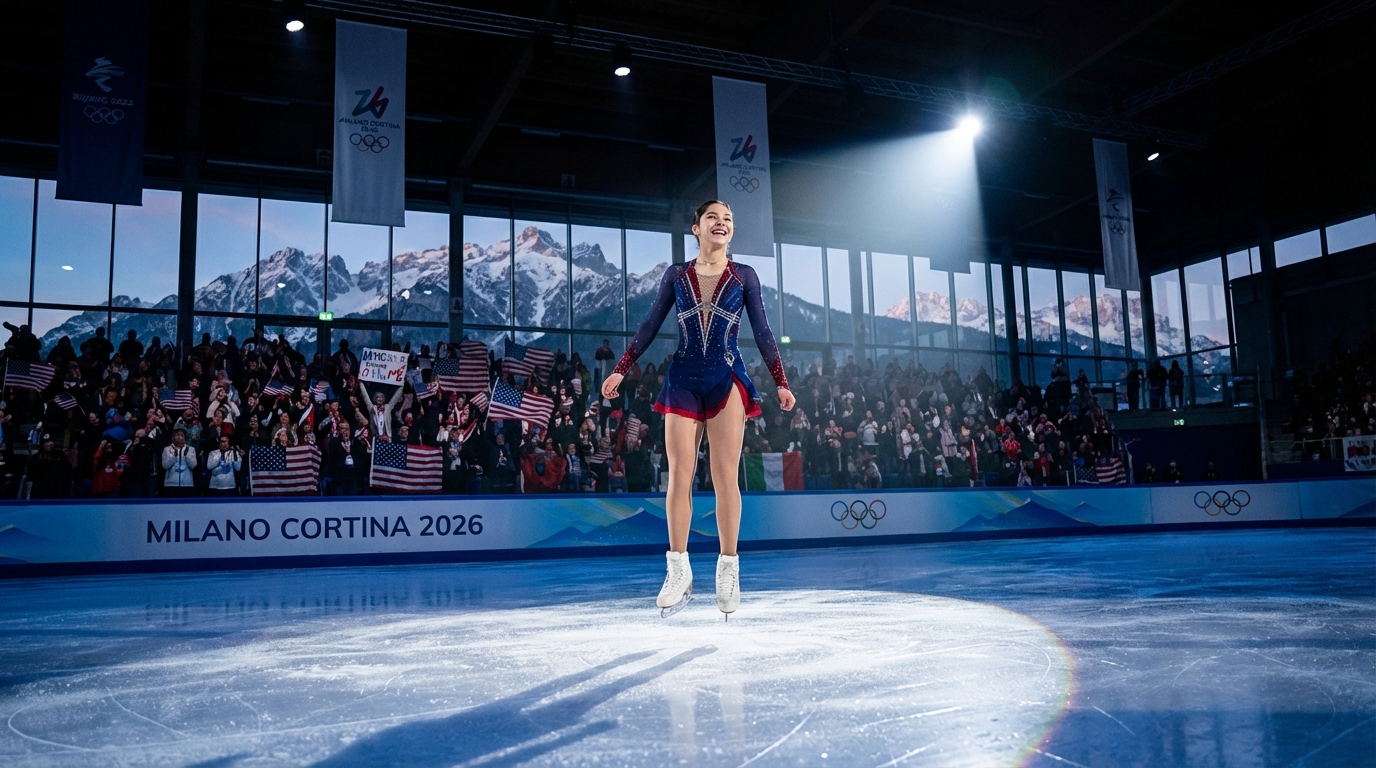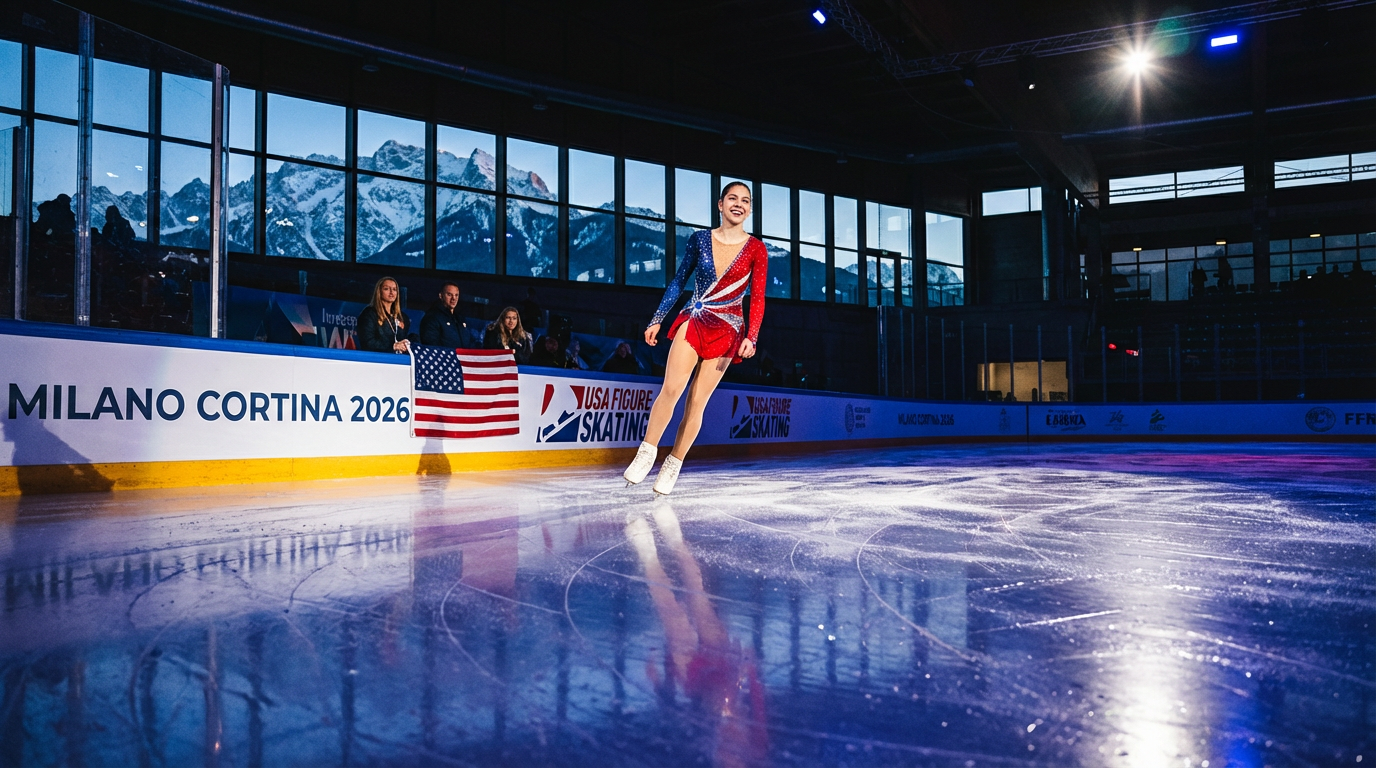
Behind every great figure skater is a coach who believed. For Alysa Liu, that statement is both simpler and more complicated than it sounds. Her path to Olympic gold in Milano Cortina wasn't just a story of talent meeting preparation — it was a story of trust rebuilt, relationships repaired, and a coaching partnership forged in the fire of adversity.
The Prodigy's Problem
Alysa Liu was always going to be special. She landed her first triple axel in competition at age 12, becoming the youngest woman to do so in U.S. history. She won her first U.S. Championship at 13, then won it again at 14. The skating world anointed her as America's next great hope, and the weight of those expectations landed on the shoulders of a teenager who was still figuring out who she was.
But prodigies face a unique challenge: the coaching relationship that builds a child into a champion is not always the coaching relationship that sustains an adult competitor. As Liu grew — physically, emotionally, technically — her needs changed. The jump-focused training that had produced those early triple axels needed to evolve into a more holistic approach that encompassed artistry, stamina, and competitive psychology.
The transition was not smooth. Liu went through coaching changes that, from the outside, looked turbulent. Insiders knew the reality was more nuanced — a young woman taking ownership of her career, seeking the right fit for who she was becoming rather than who she had been.
Finding the Right Partnership
The coaching team that Liu ultimately assembled for the Olympic cycle was built on a foundation of mutual respect and shared vision. Her head coach brought a philosophy that balanced technical excellence with artistic expression — a combination that Liu had been seeking for years. The relationship wasn't built overnight. It was constructed through hundreds of hours of ice time, frank conversations about expectations and boundaries, and a willingness from both sides to be vulnerable.
"I needed a coach who would treat me like an adult," Liu said. "Not because I had all the answers — I didn't. But because I needed to be part of the process. I needed to understand why we were doing what we were doing, not just be told what to do."
Her coaching team met that need. Training sessions became collaborative rather than dictatorial. Jump technique was refined through video analysis sessions where Liu was an active participant, not a passive subject. Program choreography was developed with Liu's input on music selection, emotional narrative, and movement vocabulary.
Rebuilding the Triple Axel
The signature element of Liu's career — the triple axel — underwent a quiet revolution under her new coaching team. The jump that had once been Liu's calling card had become inconsistent during her mid-career coaching transitions. The mechanics were slightly off, the timing variable. In competition, the triple axel was a coin flip: sometimes magnificent, sometimes a liability.
Her coaching team went back to basics. They deconstructed the jump, analyzing every component from approach speed to air position to landing mechanics. The rebuild took months — months during which Liu didn't attempt the jump in competition, leading to speculation that she had lost it entirely.
"That was the hardest part," Liu admitted. "People were writing articles about how I couldn't do the triple axel anymore. My coach said, 'Let them write. When we bring it back, it'll be the best triple axel you've ever thrown.' And it was."
The Olympic Season
By the 2025-26 competitive season, the results of the coaching partnership were undeniable. Liu's programs were the most artistically complete of her career — skating critics who had once dismissed her as "all jumps, no artistry" were forced to reassess. Her competitive consistency improved dramatically, with clean short programs becoming the norm rather than the exception.
The Grand Prix season served as a proving ground. Liu won two Grand Prix events and finished second in the Grand Prix Final, demonstrating that she could perform under pressure against the world's best. More importantly, she looked like she was enjoying herself — a quality that had been conspicuously absent during her mid-career struggles.
"I'm having fun again," Liu said during the Grand Prix season. "I forgot what that felt like. My coaching team gave that back to me. They reminded me why I started skating in the first place."
Milano Cortina: The Short Program
Liu's Olympic short program was a statement of intent. She opened with the rebuilt triple axel — her first in Olympic competition — and landed it with a certainty that silenced every doubter in the arena. The rest of the program was a showcase of the artistry she had developed under her coaching team's guidance: expressive arms, musical sensitivity, and a presence that filled the ice the way only truly great skaters can.
She finished the short program in first place. In the kiss-and-cry area, Liu and her coach shared a look that said more than any score could. They both knew what this moment had cost. They both knew it was worth it.
The Free Skate and Gold
The free skate was Liu at her absolute best. Every jump landed. Every spin centered. Every transition flowing seamlessly into the next element. The program, choreographed to music that Liu had personally selected, told a story of resilience and arrival — a young woman who had been through the fire and emerged not just intact but transformed.
When the scores were posted and the gold medal was confirmed, Liu buried her face in her coach's shoulder and sobbed. The television cameras caught every second, and across America, living rooms erupted. The prodigy had become a champion. Not through talent alone, but through the painstaking work of building a coaching partnership that honored who she was.
The Lesson
"People think coaching is about telling an athlete what to do," Liu's coach reflected after the gold medal ceremony. "It's not. It's about listening. It's about understanding what this person needs — not what the sport needs, not what the federation needs, but what this person needs. Alysa needed to be heard. Once she was, the talent did the rest."
Alysa Liu's Olympic gold is a testament to many things: natural ability, work ethic, competitive fire. But more than anything, it's a testament to the power of the right partnership. The coach who listened. The skater who trusted. And the gold medal that proved they were right to believe in each other.