Ilia Malinin: The Quad God of American Figure Skating
How a 21-year-old from Virginia is redefining what's possible on ice
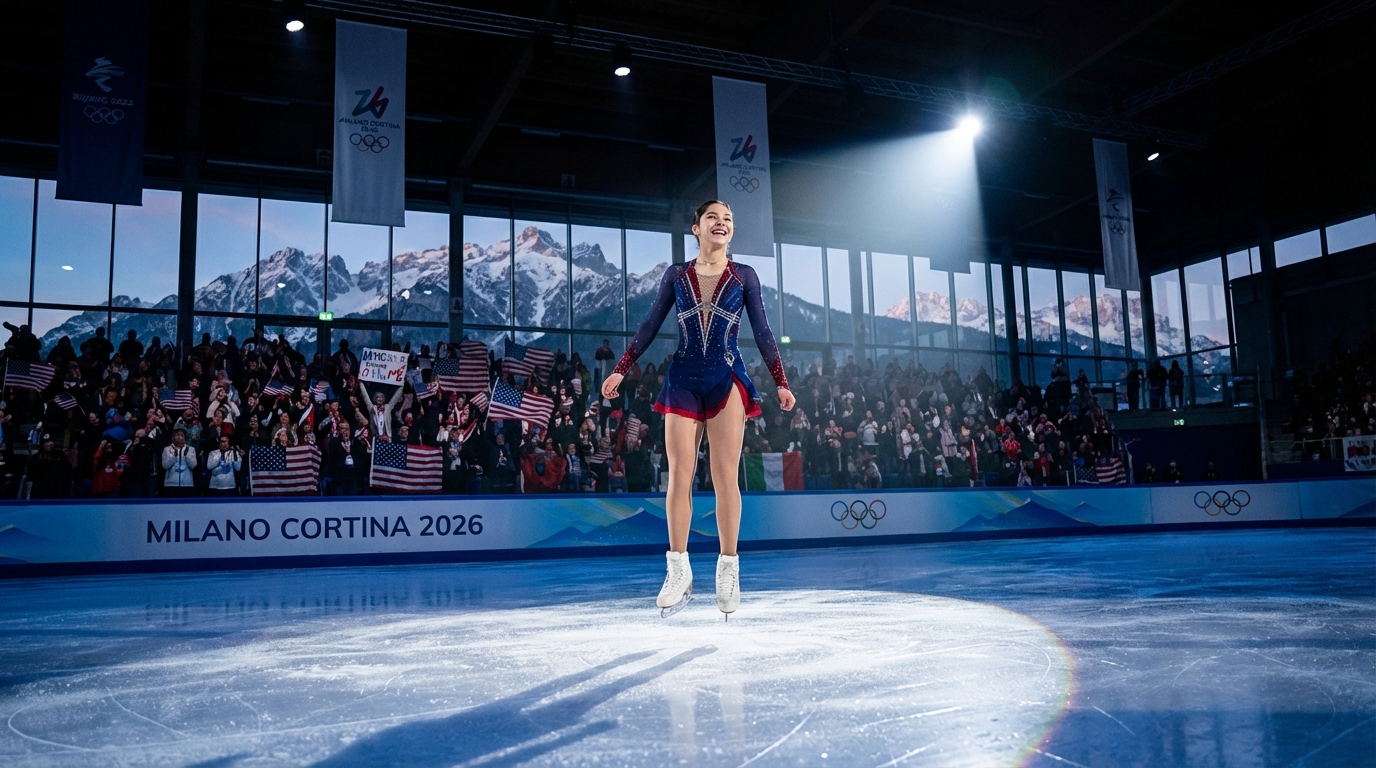
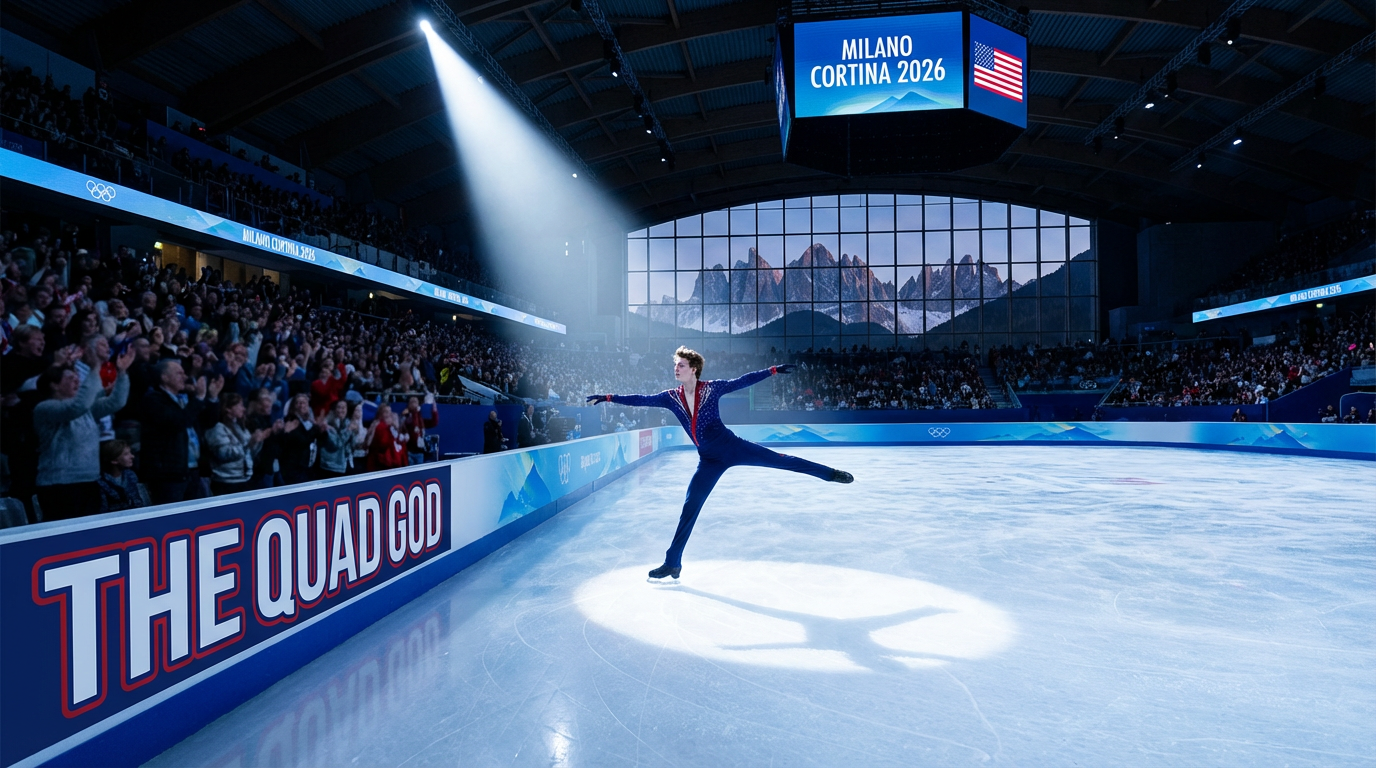
Under the glittering chandeliers of the Mediolanum Forum in Milano Cortina, nestled amid the jagged peaks of the Italian Dolomites, Ilia Malinin transformed the ice into his personal battlefield. On a night when the Alpine winds howled outside and 12,000 spectators held their breath inside, the 21-year-old from Fairfax, Virginia, unleashed a free skate that shattered records and redefined human limits. Five quads—two quadruple Axels, including history's first clean 4A in Olympic competition—propelled him to gold, etching Team USA's name deeper into the 33-medal legacy of these Winter Games. Malinin did not merely skate; he soared, twisted, and conquered, proving that American ingenuity could bend the laws of physics on Italian ice.
This was no solo triumph in isolation. Malinin's virtuoso display anchored Team USA's figure skating dominance, following their bronze in the team event and setting the stage for individual glory. In a sport where milliseconds separate ecstasy from agony, his performance fused raw power, surgical precision, and unyielding mental fortitude—a testament to the excellence that has long defined American athletes on the global stage.
The Event: Mastering the Ice Arena
Men's figure skating at the Olympics unfolds in two acts: the short program, a 2:50 technical gauntlet demanding a triple Axel, two solo jumps, and three spins, scored on a razor-thin scale of execution and difficulty; then the free skate, a 4:30 epic where skaters unleash their full arsenal. Judges award points for Technical Element Scores (TES) based on jumps' base values plus Grade of Execution (GOE) bonuses up to plus-5, layered atop Program Components Scores (PCS) for artistry and skating skills. Quads reign supreme here: a 4Lz (quad Lutzes) carries 11.50 base value, but under-rotation or falls erase it all.
Strategy is king. Skaters sequence jumps for flow—early quads to build momentum and GOE, late ones to capitalize on fatigue-fueled risks from rivals. In Milano Cortina's pressurized cauldron, where the ice gleams like polished marble under spotlights and the Dolomites loom as silent witnesses, one mistimed edge or wobbly landing cascades into defeat. Malinin's edge? He didn't just attempt quads; he revolutionized them, landing combinations no one else dared dream.
The Skater: Forged in Virginia Ice
Malinin, born to rhythmic gymnastics champions who traded Moscow for Virginia's suburbs, grew up in rinks echoing with the scrape of blades on synthetic ice. By 15, he landed the world's first quad Axel in competition. Now, at 21, he's 6-foot-1 of coiled athleticism, with arms like pistons and a core honed by off-ice plyometrics that mimic aerial combat. His coaches at the U.S. Figure Skating Center crafted him not as a jumper alone, but a complete artist—balletic transitions masking explosive rotations.
His role in Team USA mirrored a quarterback's poise: reliable in the team event's segments, then explosive in singles. "Ice is my canvas," Malinin said post-qualifying. "From Virginia fields to these mountains, I've painted with quads no one's seen." His selection stemmed from a philosophy of calculated audacity—pairing unmatched difficulty with near-perfect execution to outscore international rivals clinging to safer triples.
The Program: A Quad Symphony of Risk and Reward
Malinin's free skate to soaring violin strains of "Lord of the Dance" was a tactical masterpiece, clocking 234.09 points for gold. He opened conservatively yet boldly: a 4Lz+3T combo (quad Lutz-triple toe) at 14.85 base, GOE +4.03, blades whispering fire across the ice. Midway, the 4A solo—1.5 revolutions pre-rotation into four mid-air spins—exploded like a meteor, 14.30 value pristine, crowd erupting as he stuck the landing with knees flexed like suspension springs.
The second act ramped tension: 4F (quad flip, among the hardest) into 3A (triple Axel), then a 4A+3T that history books will immortalize. Why this order? Early power jumps oxygenated his program; late combos exploited rivals' exhaustion. PCS peaked at 98.20 for transitions flowing like mountain streams, spins devouring the ice in death-drop whirlwinds. In the Dolomites' chill seeping through arena walls, Malinin's breath steamed defiance—each quad a declaration of American precision engineering.
The Performance: Glory in the Final Flight
The free skate final unfolded like a thriller. Japan’s Yuma Kagiyama, the short-program leader, skated first, nailing four quads but faltering on a 4S pop. Russia’s underdog shimmered through triples, eyes on silver. Then Malinin. He glided to center ice, the Forum's vaulted ceiling mirroring the starry Alps outside. Silence fell, broken only by the Zamboni's distant hum.
First quad Lutz-triple toe: flawless, score flashing 19.88. Momentum surged. The arena's Italian faithful, waving U.S. flags amid tricolori, sensed history. Rival coaches shifted uneasily as Malinin's 4A pierced the air—rotation so tight it blurred his silhouette, landing telegraphed by a fist pump slicing fogged breath. By the second 4A combo, Kagiyama's camp knew: 15-point lead insurmountable.
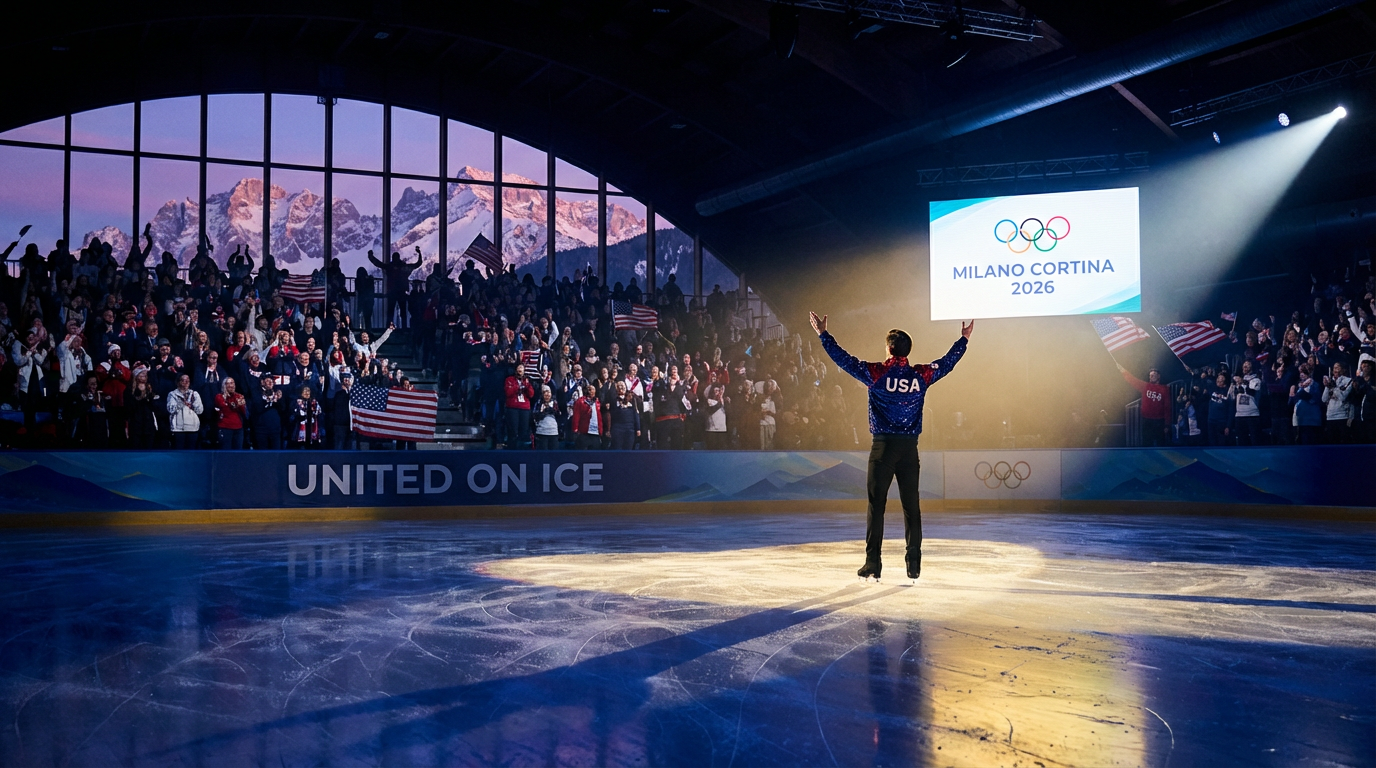
Closing sequence—a 4F edge-call survived, spins capping with a Biellmann that arched his spine like a bowstring. Final buzzer: 323.83 total, six points clear of silver. He collapsed arms-wide, ice misting around him, as "Star-Spangled Banner" thundered. "That 4A in the finale? Felt like flying over the Dolomites," Malinin gasped later. "For Team USA, for every kid in Virginia dreaming big—this is what impossible tastes like."
"Ilia's not just landing quads; he's rewriting the physics of our sport. Watching him in Milano, you see pure, unfiltered excellence—the kind that inspires nations." — U.S. coach Adam Rippon
Behind the blades: tactical genius. Malinin's team analyzed rivals' weaknesses via Milano's high-def replays—Kagiyama's late-program wobbles, prompting those back-loaded monsters. Off-ice, cryotherapy and anti-gravity treadmills fortified his edges against the 4,000-meter altitude's bite.
The Science of Quad Mastery
Quad Axels demand 1,600 degrees of rotation in 0.6 seconds—torque rivaling Formula 1 g-forces, powered by 20-hour weeks of harness drills and ballet for air position. Malinin's innovation? Euler jumps bridging rotations, minimizing ice time for cleaner entries. Psychologically, it's Everest: visualization sessions replayed Dolomite descents, forging nerves of steel.
This victory crowns a U.S. renaissance. From Michelle Kwan's grace to Nathan Chen's precision, Malinin elevates it—five quads clean, zero falls, artistry undiluted. In the team event bronze earlier that week, his segments added crucial TES, fueling the 33-medal haul. As confetti rained amid Alpine echoes, he hoisted gold, eyes on legacies yet unwritten.
"Team USA didn't come to Milano Cortina to participate," Caldwell's aerials teammate echoed in cross-sport tribute. "We came to redefine winning." Malinin embodied that: a Virginia phenom whose blades carved eternity into Italian ice, inspiring the next generation to chase their own quad gods.