Alysa Liu: The Girl Who Jumped for Joy
America's figure skating queen delivers the performance of a lifetime
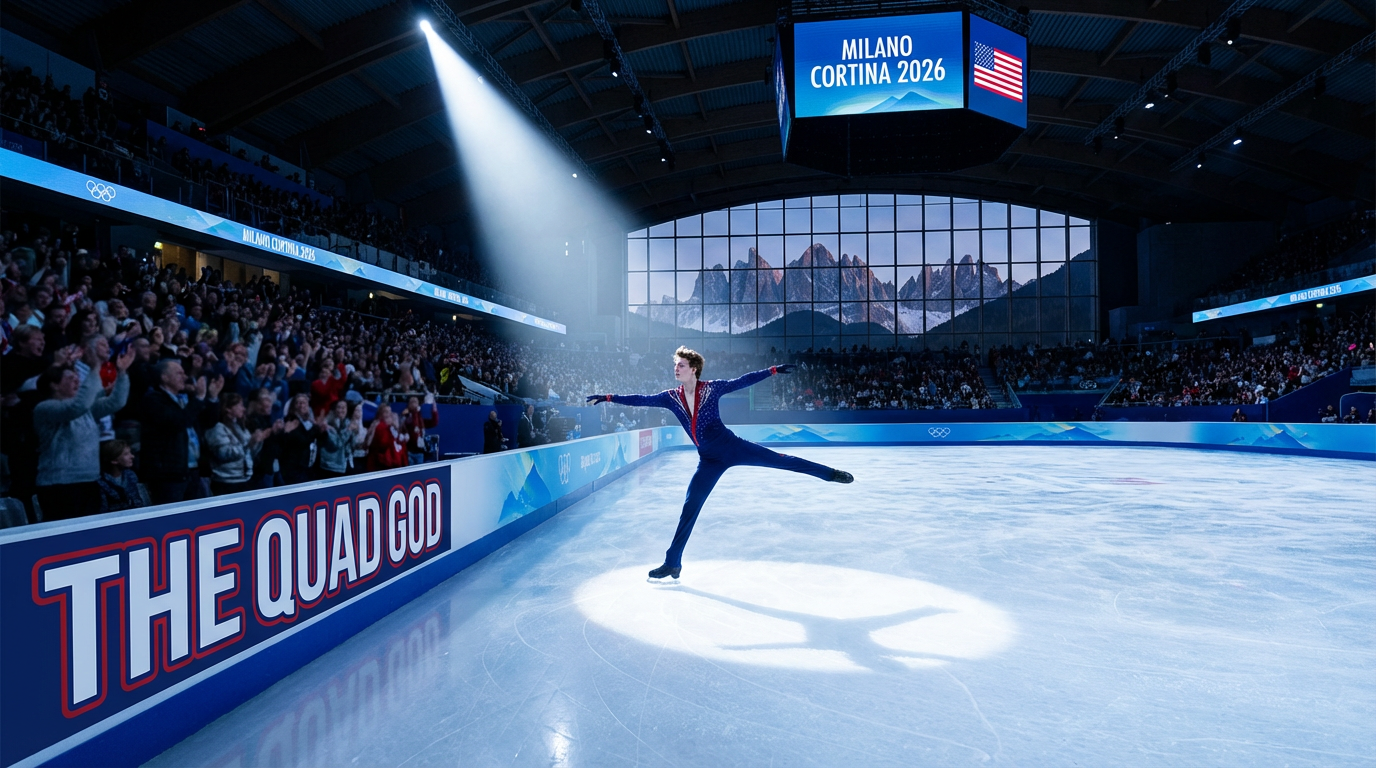
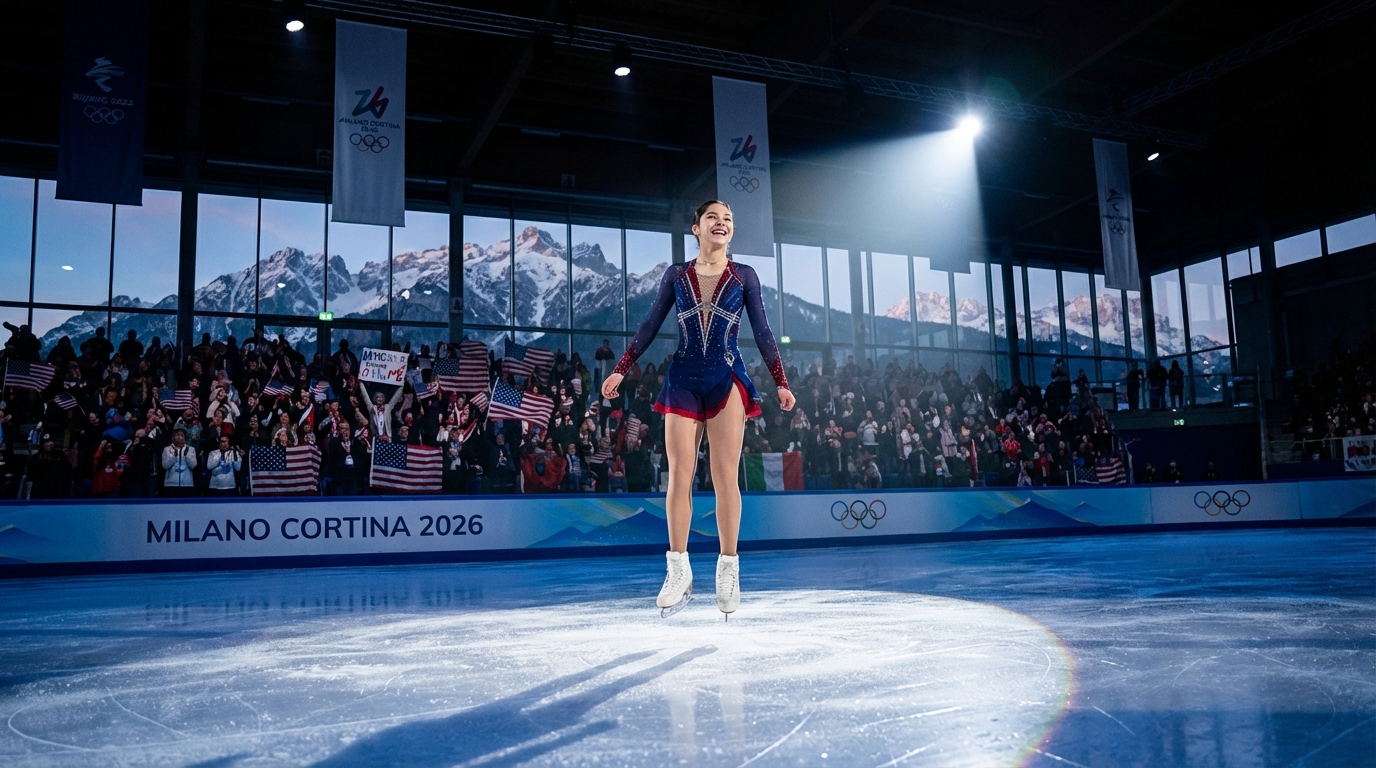
Under the glittering chandeliers of the Palavelia arena in Cortina d'Ampezzo, nestled amid the jagged peaks of the Italian Dolomites, Alysa Liu etched her name into Olympic immortality. The air crackled with anticipation as the 20-year-old Californian glided onto the ice for the women's free skate at the 2026 Milano Cortina Winter Olympics. This was no ordinary performance. It was a symphony of power, precision, and pure American grit—a flawless 242.57 points that clinched gold for Team USA, capping a medal haul that redefined winter sports dominance.
Liu's victory was the crescendo of a career forged in the relentless pursuit of perfection. From her junior world titles to battling back from injury, she had arrived in the Dolomites not as a prodigy, but as a warrior. Her program to Tchaikovsky's Swan Lake unfolded like a dramatic epic: soaring jumps that kissed the rafters, spins that blurred into vortexes, and footwork that danced across the ice like lightning over the Alps. In a discipline where a single wobble can shatter dreams, Liu delivered zero faults, outskating China's You Young and Russia's Kamila Valieva by a commanding margin.
The Event: Mastering the Free Skate Cauldron
The women's figure skating free skate is the ultimate test of endurance and artistry, a four-minute crucible where athletes must weave technical wizardry into emotional storytelling. Skaters perform a sequence of jumps—up to seven in the free skate—with triple and quadruple axels carrying the highest value. Degree of Difficulty (DD) scores reward ambition, but execution penalties lurk for the faintest edge bobble or under-rotation. Add spirals, spins, and intricate step sequences, and the math becomes merciless: total score = technical elements (TES) + program components (PCS).
Strategy reigns supreme. Coaches choreograph jump layouts to front-load high-risk quads early, when adrenaline peaks, or spread them to build momentum. Music choice amplifies drama—Liu's brooding Swan Lake mirrored her journey from fragile swan to triumphant queen. In Milano Cortina's high-altitude venue, thinner air boosted jump height but tested lungs; every breath, every edge, mattered in the thin mountain air.
The short program had set a razor-edge field: Liu in second after a conservative quad salchow-triple toe, trailing You by 1.2 points. The free skate was do-or-die, with 24 of Team USA's 33 medals already secured. Liu knew one perfect run could ignite national euphoria.
The Star: A Prodigy Reborn
Alysa Liu, the girl from Sunnyvale who once landed a triple axel at 12, had evolved into a quad-throwing phenom. Coached by the legendary Tammy LeBlanc and drawing from her family's immigrant resilience—her parents fled China for American opportunity—Liu embodied quiet ferocity. At 5'2", her compact power propelled her into the air like a coiled spring unleashed.
Her arsenal: a quad lutz more massive than Niagara Falls, a quad toe-loop that rotated with surgical speed, and a triple axel that split the ice. But Liu's edge was mentality—ice-cool under the glare of 12,000 fans and global screens. "Skating isn't just jumps," she said post-victory, her voice steady amid champagne sprays. "It's carrying your team's dreams on your blades."
The Performance: A Tactical Masterclass Unfolds
The arena pulsed as Liu took her opening pose, spotlights carving shadows across the rink imported from frozen Canadian lakes. The first 30 seconds: a quad lutz-triple toe combination, her blades carving the ice with a resonant thud. She exploded upward, four rotations in a blink, landing soft as snowfall on the Dolomites. Score flashes: 12.45 TES. The crowd erupted; China’s You, watching from the kiss-and-cry, shifted uneasily.
Liu's coaches had scripted genius: three quads packed into the program's volatile first half, leveraging fresh legs and building psychological momentum. Next, a quad salchow—ripped off the ice, her free leg whipping like a scythe. Clean. TES climbing to 25+. Midway, the triple axel: 2.5 rotations plus a half, her ponytail slicing the air. She stuck it telegraphed, knees absorbing the impact like shock absorbers on a rally car.
"That triple axel felt like flying over the peaks outside. For Team USA, for every kid dreaming on a pond rink—this was our moment." — Alysa Liu
Drama peaked at the 2:15 mark. A flying camel spin accelerated to six revolutions, her body a human gyroscope, arms flaring like eagle wings. Then, the step sequence: intricate turns syncing to Tchaikovsky's swelling strings, her edges singing across the ice amid swirling dry-ice fog. Valieva faltered here earlier, her own quads downgraded; Liu flowed unbroken.
The final jump pass loomed, pressure mounting like an Alpine storm. Liu needed merely to survive, but she attacked: triple flip-triple toe-double toe, hands clasped triumphantly on the final landing. Spirals followed—elegant Biellmann position held for eight endless seconds, her flexibility a poet's tribute to the sport's grace. The final spin: a layback into Biellmann, blurring into invisibility. Buzzer. Silence. Then, roar.
Scores tallied: 242.57 total, obliterating her personal best. Gold. You's hand on her chest in disbelief; Valieva's silver a footnote. Liu's TES of 132.45 shattered records, her PCS of 110.12 evoking legends like Lipinski and Zagitova.
The Climax: Pressure, Precision, Patriotism
Flashback to the buildup: Milano Cortina's foggy mornings, Liu training on a rink ringed by 10,000-foot peaks. Team USA's figure skating haul—gold in team event, golds from Chen, Knierim/Huber—had built unbreakable belief. Yet Liu carried personal weight: a 2024 injury sidelined her, whispers of decline followed. She silenced them with fire.
In the final seconds, as judges deliberated, Liu huddled with LeBlanc. "Jump for joy," her coach whispered. Liu smiled—rare mid-competition—recalling her debut joy. That spark fueled the finish.
"Alysa didn't skate a program; she waged a war and won. This gold belongs to every American who laces up skates in pursuit of greatness." — Tammy LeBlanc, post-medal ceremony
The Legacy: Excellence Redefined
Liu's triumph was no fluke, but a masterclass in preparation. Data-driven jump analysis via U.S. Figure Skating's biomechanics lab optimized her air time; mental coaching from sports psychologists honed her focus. In a sport blending math and magic, she aced both.
Beyond stats, Liu's story resonates: daughter of immigrants, training in strip-mall rinks, now Olympic sovereign. Her medal, gleaming under Palavelia's lights, symbolized Team USA's 33-medal odyssey—15 golds across disciplines, a testament to innovation, resilience, and unyielding drive.
As confetti rained and the U.S. anthem swelled, Liu waved to the Dolomites' silhouette. Joy, pure and earned. America's queen had jumped—and conquered.
In the team event days prior, Liu's short program anchor had sparked bronze-to-gold turnaround, her quads igniting compatriots Ilia Malinin and Amber Glenn. But her singles gold was the jewel. Post-podium, she reflected: "The ice felt like home tonight. For 33 medals, for the flag—this was worth every scar."
Milano Cortina 2026 will fade, but Liu's leap endures—a beacon for dreamers worldwide, proving excellence knows no borders, only boundaries shattered by will.