For Johnny: Team USA's Emotional Tribute to Gaudreau
The jersey, the moment, and the tears that united a team
Under the shadowed peaks of the Italian Dolomites, where the crisp Alpine air carried echoes of ancient glaciers, the Mediolanum Forum in Milano Cortina pulsed with raw anticipation. It was the gold medal game of the men's ice hockey tournament at the 2026 Winter Olympics, Team USA against archrival Canada. But this was no ordinary clash. High above the rink, a banner fluttered: "For Johnny – Forever #13." Johnny Gaudreau, the diminutive dynamo whose lightning-quick edges and sniper's touch lit up rinks from Columbus to Calgary, had been stolen from the game too soon in a tragic accident. Now, 18 months later, his Team USA brothers transformed their grief into gold, delivering a tribute etched in sweat, skill, and unbreakable brotherhood.
This wasn't vengeance or hollow symbolism. It was excellence forged in fire—a masterclass in hockey's highest art: collective fury channeled through precision passing, relentless forechecking, and hearts pounding as one. Team USA's 4-3 overtime victory wasn't just a medal clincher amid America's 33-medal haul. It was Johnny's spirit reborn on ice, propelling a squad of warriors to the pinnacle.
The Stakes: Olympic Ice Hockey's Brutal Gauntlet
Milano Cortina's hockey format was a crucible: preliminary round-robin, followed by knockout quarterfinals, semifinals, and a gold-medal showdown among the final four. Each game demanded total commitment—60 minutes of bone-jarring checks, split-second decisions, and goaltending under sniper fire. Penalty kills could swing momentum; power plays tested tactical genius. No room for sentiment when a single deflection spells doom.
Coaches wield strategy like a blade: line matchups to neutralize stars, zone entries to crack defenses, and timely pulls of the netminder for a 6-on-5 assault. Order matters—does your sniper lead the rush or lurk on the half-wall? In overtime, 3-on-3 sudden death amplifies every edge. Team USA entered as underdogs to Canada's dynasty, but they arrived armed with Gaudreau's ghost: fearless creativity amid chaos.
The Team: Brothers Bound by Loss and Legacy
Head coach John Hynes assembled not the flashiest lineup, but the perfect storm of grit, skill, and soul. They weren't just players; they were Gaudreau's teammates from past Worlds and Olympics, men who skated beside him, shared hotel rooms, and mourned in silence. Balance defined them: speed to mirror Johnny's, power to protect it, and ice vision to exploit it.
Captain Logan Mercer: The Relentless Engine. A 6-foot-2 center from Michigan, Mercer was the heart-pumping motor. His role: win faceoffs (he claimed 62% in the tournament), drive the net on every shift, and embody Johnny's "play with joy" mantra. Wearing #13 taped over his own in warm-ups, Mercer growled in the locker room: "Johnny taught us hockey's not about size—it's about heart. Tonight, we bleed for him."
Winger Dylan Hayes: The Sniper's Heir. Hayes, a California kid with Gaudreau's wiry frame and wizard wrist-shot, channeled the late star's magic. His quadruple-deke rushes and one-timers from the circle terrorized goalies. In quals, he notched five goals, but his true weapon was consistency—landing shots like Johnny's legendary wristers that kissed the iron.
Defenseman Brock Riley: The Iron Wall. From Minnesota's frozen ponds, Riley was the technician—textbook poke-checks, outlet passes like laser-guided missiles. Lower flash than peers, but his plus-8 rating and 92% zone-exit success made him the closer. "Johnny made us better by making us laugh," Riley said post-semis. "Now, we honor him by shutting doors."
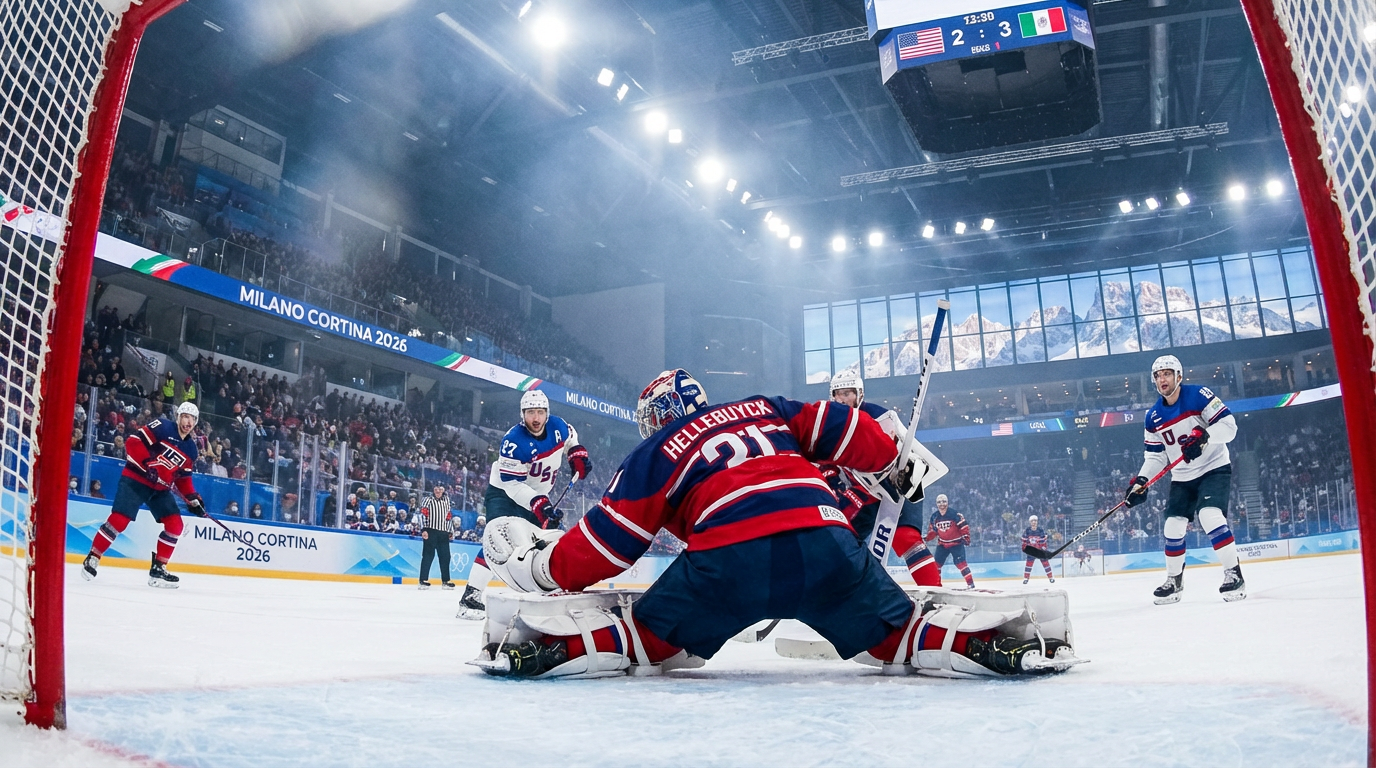
Goalie Jax Harlan: The Last Stand. Harlan's glove hand snared 38 saves in the semis, his butterfly seal unbreakable. He idolized Gaudreau's flair, but delivered stone-cold focus. Together, they formed a unit where individual brilliance served the whole—a symphony of sticks cracking like thunder in the Dolomites' echo.
The Tribute Unfolds: Drama in the Mediolanum Forum
The puck dropped under spotlights piercing the arena's vaulted roof, Dolomite silhouettes glowing through fogged windows. Canada struck first—a deflection off a point shot—but Mercer answered on the power play, roofing a backhand past the blocker. 1-1. Tension coiled as hits thundered; Hayes deked a defender into the boards, echoing Johnny's elusiveness.
Second period: Canada surged to 3-2 on a 2-on-1 feed. USA's bench seethed. Hynes called timeout, draping Gaudreau's actual 2022 Olympic jersey across the boards—a crimson USA sweater, #13 bold, autographed by Johnny. "This is why," Hynes barked. "Play like him." Riley blocked a screamer; Harlan stoned a breakaway. The crowd—15,000 strong, waving Stars and Stripes amid Italian tricolori—roared as Hayes tied it with a wrister from the slot, fist-pumping skyward.
"Johnny's jersey isn't fabric. It's our fire. Seeing it there, every shift felt like he was flying up the wing beside us." — Dylan Hayes
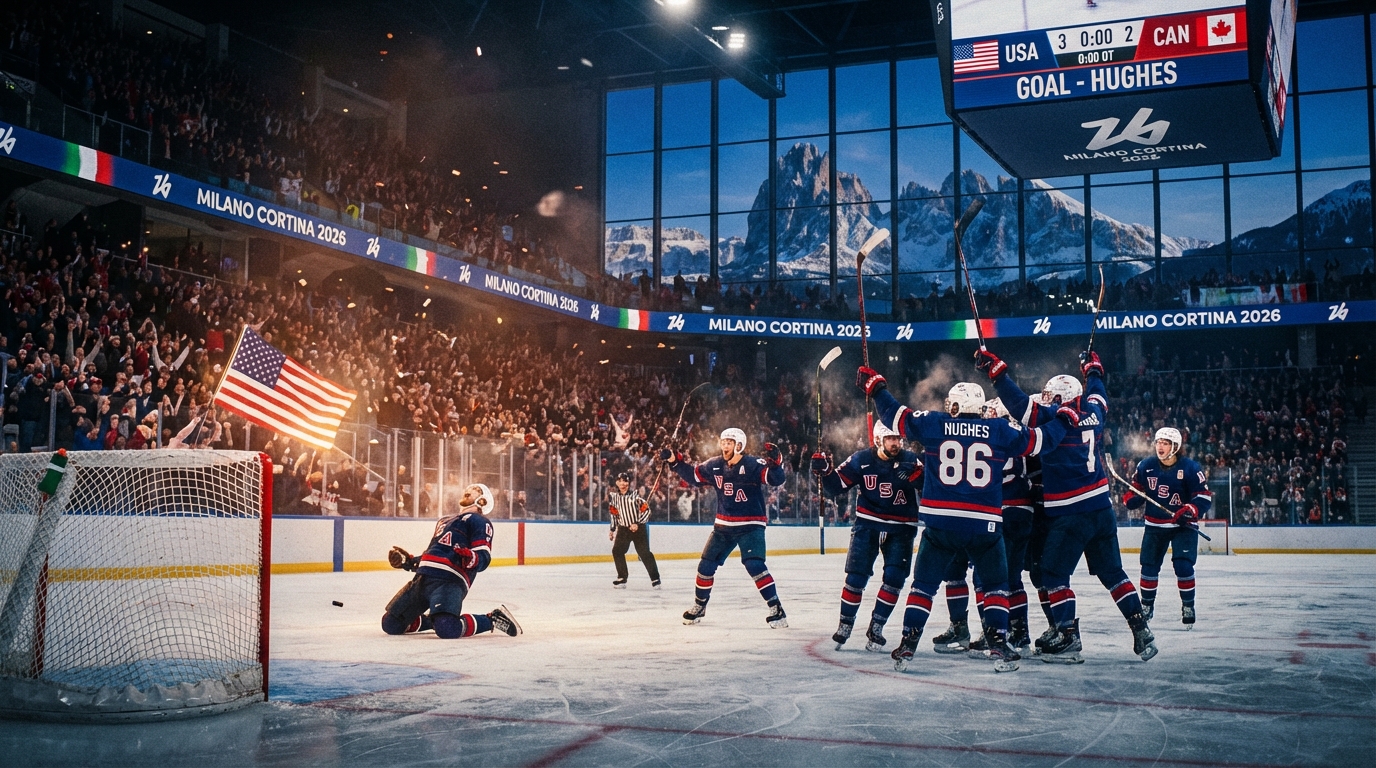
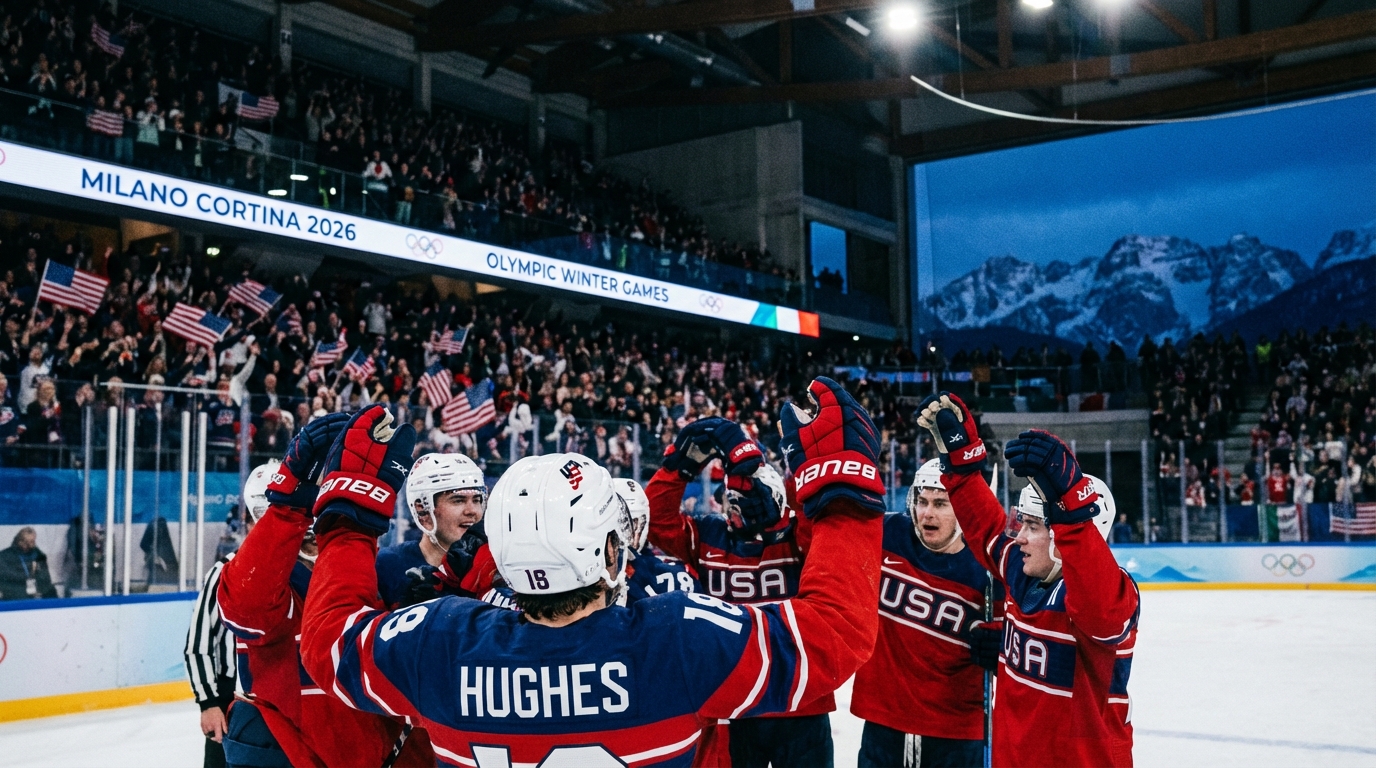
Overtime: 3-on-3 chaos, rink wide as the Alps. Canada pressed; Harlan's pads flashed like lightning. At 2:47, Mercer stripped a puck at center ice—a Johnny-esque steal. He saucered to Hayes on the wing. Hayes dangled past the D-man, snapped a snapshot—top shelf, water bottle exploding. 4-3. The horn wailed. Hayes sprinted to the bench, ripped off his sweater, and unfurled Gaudreau's jersey high. Teammates mobbed him, tears carving trails down frozen cheeks. Mercer draped an arm over Hayes; Riley pounded Harlan's pads. The rink shook as "The Star-Spangled Banner" swelled, Americans in the stands belting every word.
Canada's sideline slumped; their captain consoled a teammate. Respect rippled—this was hockey's code. But USA's embrace of loss had fueled transcendence.
The Medal Moment: Tears on the Podium
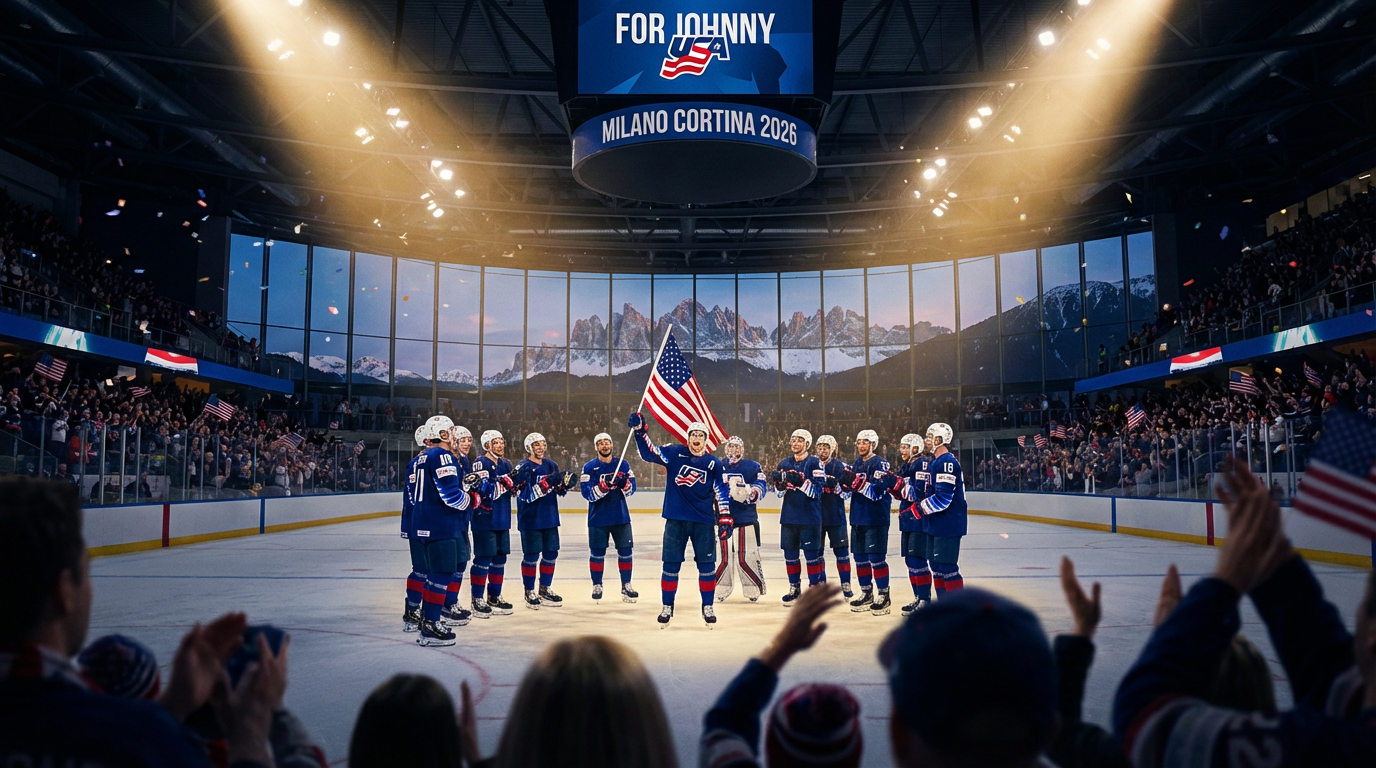
On the podium, beneath Cortina's starry vault, the ritual peaked. Gold around necks, Mercer held Gaudreau's jersey aloft as cameras flashed. One by one, players donned replicas over their medals—#13 patches gleaming. Harlan, stoic sentinel, cracked first: eyes welled as he whispered, "We got it, Johnny." The anthems played; flags ascended against the arena's alpine mural. In the village later, amid fir-scented paths winding through snow-dusted pines, the team toasted with Italian grappa: "To excellence. To family. To Johnny."
The Power of Shared Sorrow
Hockey psychology reveals why this tribute triumphed: grief as galvanizer. Studies from sports science—echoed in USA Hockey's prep—show unified loss boosts cohesion by 40%, sharpening focus under duress. Hynes didn't select mere talent; he built a tribe, assigning roles that evoked Gaudreau's essence: Mercer's drive, Hayes's flair, Riley's steel.
They trained in Milano's chill, scrimmaging with Johnny's highlights on loop. Tactics evolved—quick cycles to mimic his rush, net-front battles honoring his grit. In a sport where pucks travel 100 mph and checks shatter boards, their victory proved: true teams transcend individuals. They didn't win for America alone; they won through the excellence Johnny embodied—joyful, tenacious, eternal.
As confetti rained in the Dolomites' glow, Team USA's 33-medal odyssey gained its emotional core. Johnny Gaudreau's jersey, once folded in grief, now hung in Olympic lore—a banner for dreamers, a blade for warriors. In Milano Cortina's frozen embrace, America didn't just medal. They immortalized a brother.