The Hughes Brothers: Blood, Ice, and Gold
Jack and Quinn Hughes become the first brothers to win Olympic hockey gold together
Under the jagged peaks of the Italian Dolomites, where the air bites like a check into the boards, the puck dropped on a dream two decades in the making. In the electric chill of Cortina d'Ampezzo's Olympic arena—flanked by snow-capped spires that pierced the twilight sky—Jack and Quinn Hughes etched their names into eternity. Team USA's gold-medal triumph in the 2026 Milano Cortina men's ice hockey tournament wasn't just a victory over Canada in the final. It was blood triumphing over ice, brotherhood forged in fire, the first time siblings hoisted Olympic hockey gold together.
This wasn't mere sibling synergy; it was American hockey reborn. Jack, the electric center with a shot like a thunderclap, and Quinn, the cerebral defenseman who quarterbacked the power play with surgical precision. Together, they dismantled foes in a tournament of brutal elimination, their shared bloodline a secret weapon in a sport where family ties are rare as a perfect power-play goal. Team USA's 33-medal haul glowed brighter with this gem, a testament to grit, genius, and unbreakable bonds.
The Stakes: A Tournament Forged in Fire
Olympic hockey is no league regular-season stroll. It's a single-elimination crucible: preliminary round to quarters, semis, then gold-medal inferno. Eight nations battle in Milano Cortina's venues, from the high-altitude rinks in Cortina—where thinner air sharpens edges and lungs burn—to the pulsating Mediolanum Forum in Milan. Every shift demands perfection; one turnover, one ill-timed pinch, and dreams shatter like thin ice.
Tactics rule here. Coaches wield lines like chess masters, balancing forecheck aggression with defensive clamps. Power plays become kill-or-be-killed duels. The Hughes brothers embodied USA's blueprint: Quinn anchoring the blue line, reading plays two steps ahead, feeding Jack's blistering rushes. Their chemistry—honed in Jersey swamps and Michigan ponds—wasn't coached; it was inherited, a genetic edge no rival could match.
The Brothers: Architects of American Glory
Quinn Hughes, captain of the Vancouver Canucks, entered Milano Cortina as the puck-moving maestro. At 26, his vision sliced through defenses like a hot blade through Zamboni resurfacing. No mere stay-at-home blueliner, Quinn logged 28 minutes per game, quarterbacking the top power play with pinpoint saucer passes. His role: stabilize chaos, launch transitions, protect the net like a fortress amid the Dolomites' howling winds.
Quinn Hughes: The General. "I've defended Jack since we were kids stealing pucks in the backyard," Quinn said post-semis, sweat freezing on his brow. "Now? It's the same, but the stakes are gold." His plus-12 rating masked bone-crunching blocks and a game-winning goal from the point against Sweden in quarters—a wrister that caromed off iron posts into the cage, silencing 12,000 roaring Scandinavians.
Jack Hughes, New Jersey Devils supernova, was velocity incarnate. At 25, his 40-goal NHL season translated to Olympic lightning: sub-10-second end-to-end rushes, dekes that left defenders grasping air. He notched eight points in six games, but his intangibles—heart-pounding shifts that willed momentum swings—defined USA's surge.
Jack Hughes: The Spark. Lean and lethal, Jack thrived in the slot, tipping Quinn's lasers or sniping from circles. "Quinn sees plays I can't even dream," Jack grinned after a hat trick versus Czechia. "Blood knows blood." His overtime snipe in semis versus Finland—a snapshot through a screen, puck exploding top shelf—propelled USA to the final, the arena erupting as Dolomite echoes amplified the roar.
The trio's complement? Forwards like Auston Matthews and forwards Matthew Tkachuk formed the killer core, but the Hughes axis was the spine. Coach David Quinn— no relation—built lines around their telepathy: Quinn-to-Jack one-timers that pierced penalty kills with metronomic fury.
The Final: Blood vs. Maple Leaf Fury
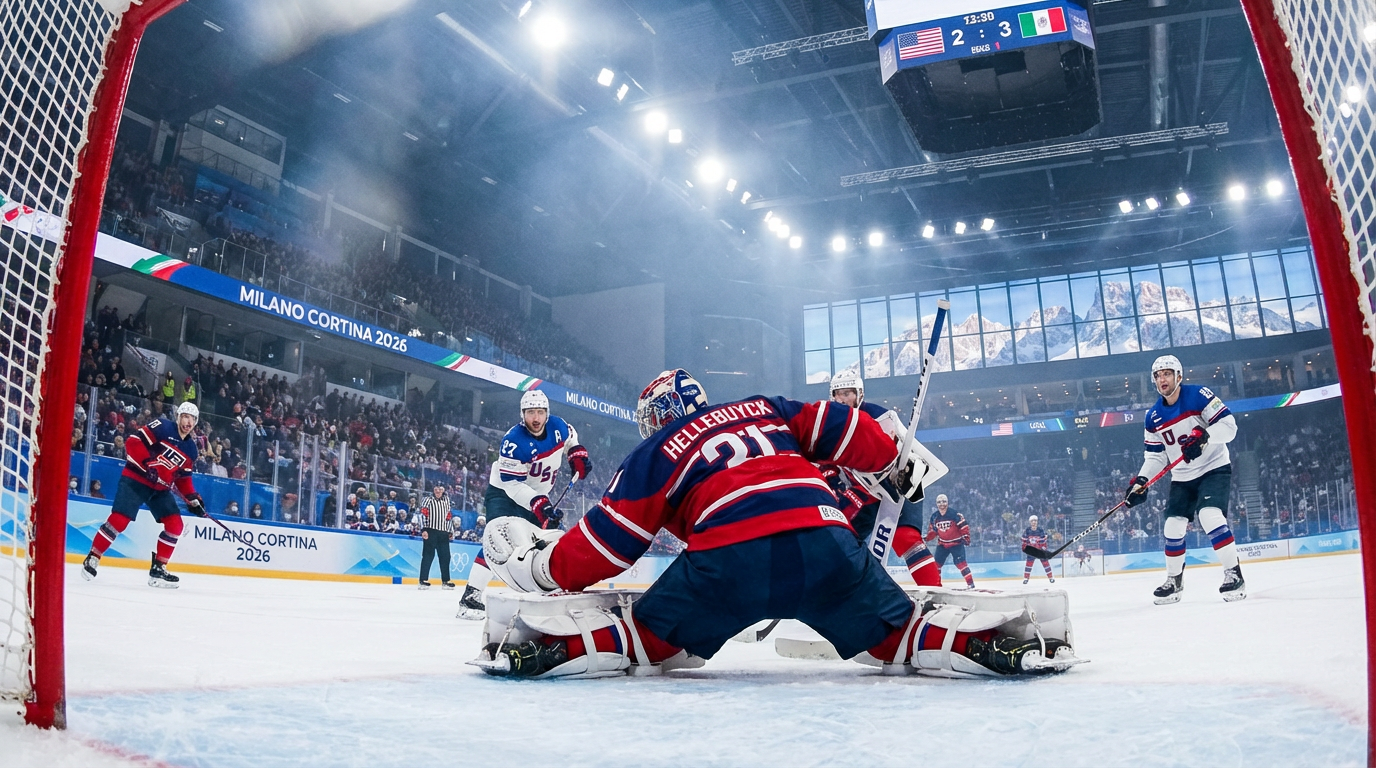
Gold-medal night: Cortina's Olympia Arena, packed with 15,000 under banners fluttering like mountain flags. Outside, Dolomites loomed ghostly in floodlights; inside, tension thickened the frost-kissed air. Canada, three-time defending champs, led 2-1 midway through two. Sidney Crosby's heirs—McDavid, Mackinnon—dominated cycles, USA's forecheck gasping.
Timeout. Coach Quinn huddled: "Hughes brothers, flip this script. Quinn, own the point. Jack, haunt their crease." Resurrection ignited. Quinn corralled a dump-in at 12:45, wheeled out of the zone, threaded a sauce through three sticks. Jack pounced, deked the D-man, roofed it five-hole. Tie game. Crowd chant: "U-S-A!" pulsing like a heartbeat.
Period three dawned brutal. Canada power play: Quinn stonewalled McDavid at the line, stripping the puck clean, igniting a 4-on-4 shorthander. Jack stripped it back, saucering to Tkachuk for 3-2 USA. But Canada tied at 3:37 left—bedlam.
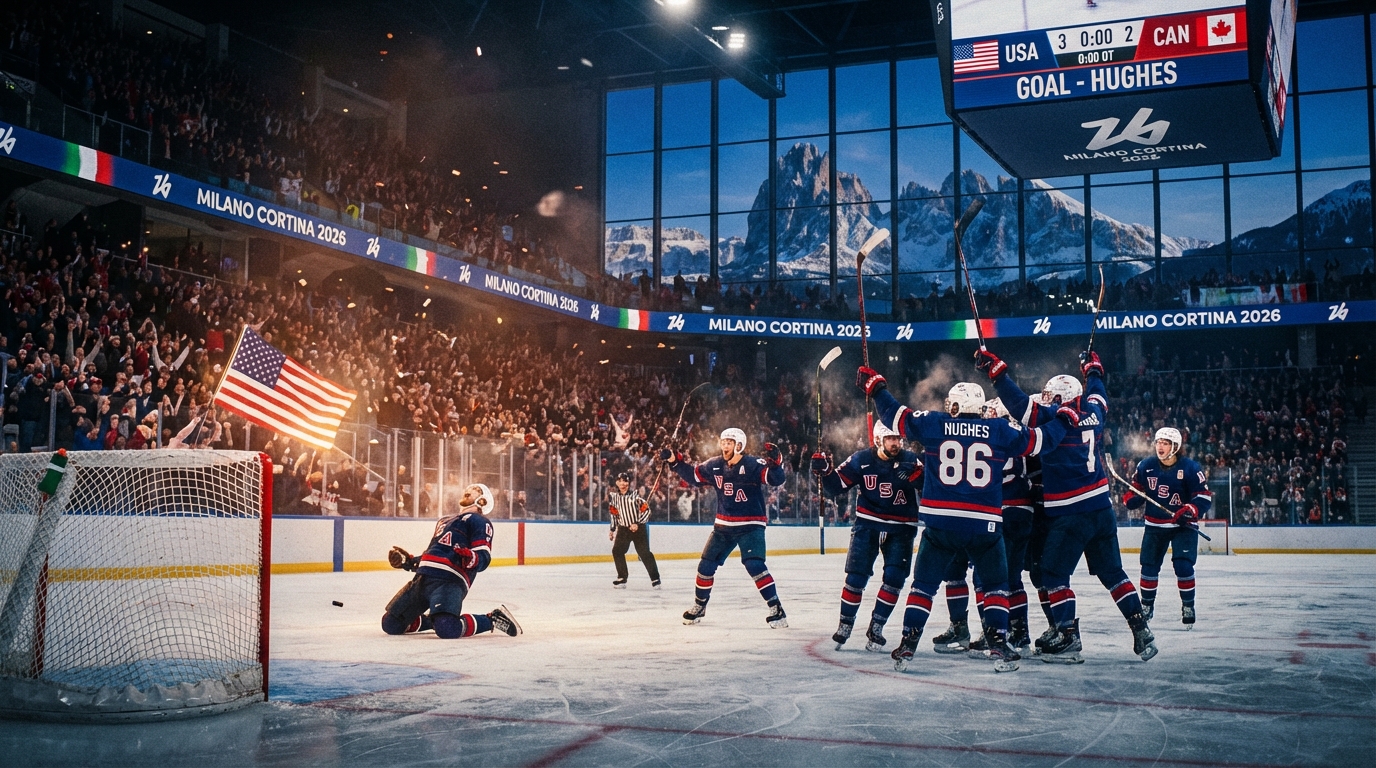
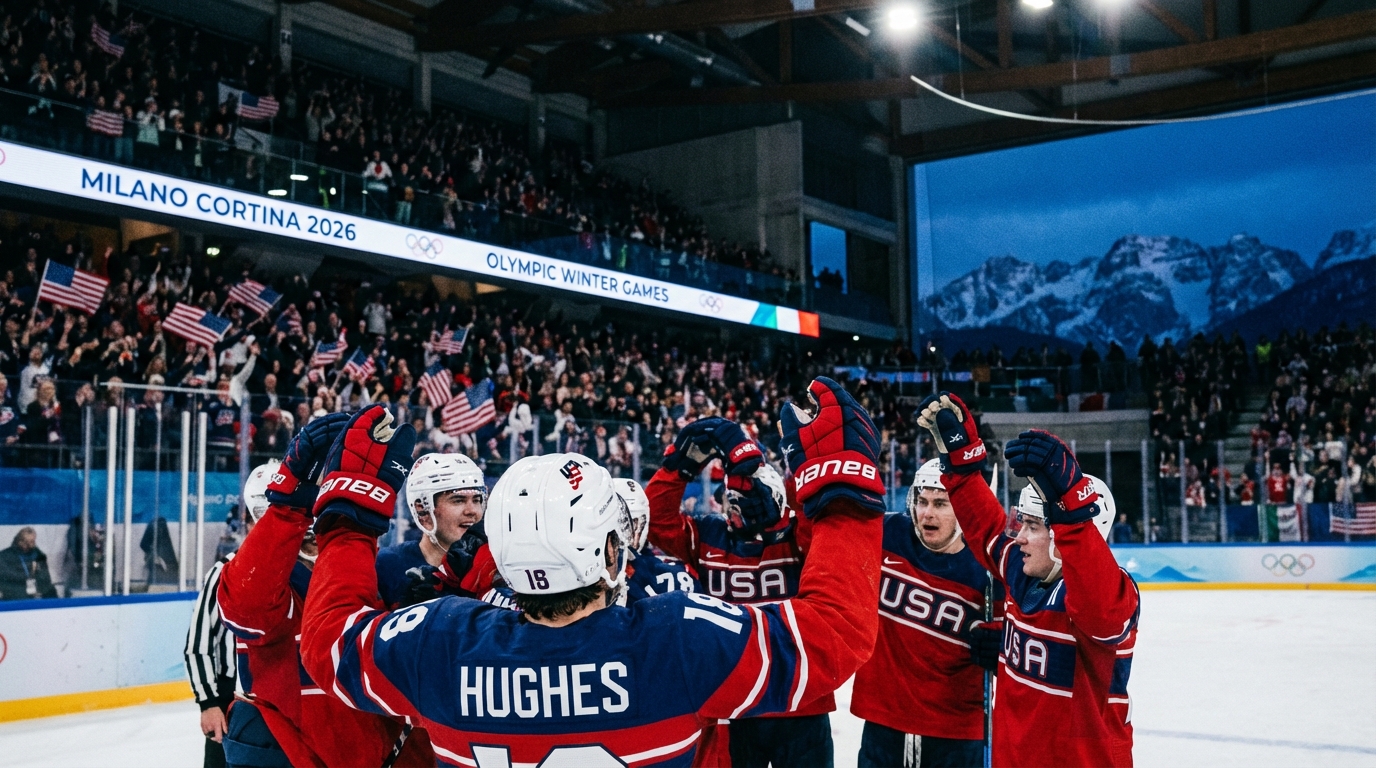
Overtime loomed, sudden death. Faceoff at center ice, brothers locking eyes amid the cauldron. Quinn won the draw back, pinched deep. Jack cycled low, drew a hook—power play. Quinn at the blue line, world narrowing to his blade. He bombed a clapper; Jack tipped it, puck knuckling past the goalie at 2:14 OT. Net bulged. Sirens wailed. Brothers collided in a tangle of red-white-and-blue jerseys, staffs piling on as confetti stormed like Alpine snow.
"That tip? I felt it before Quinn released. Brothers don't need words—just trust." — Jack Hughes, gold around his neck, voice cracking on the podium.
Final shots: 38-35 USA. Quinn: goal, three assists. Jack: two goals, assist. First brothers' gold since... never. USA's bench erupted; Canadian sticks snapped in frustration.
The Legacy: Brothers Eternal
Beyond stats flickered something profound: American excellence, unyielding. In Milano Cortina's shadow, where empires rise on ice, the Hughes brothers redefined hockey kinship. Their gold—clinched by tactical mastery (USA's 14.3% power-play efficiency, Quinn's 62% faceoff wins)—validated a philosophy: select not stars alone, but symphonies.
"We built for moments like this," Coach Quinn beamed. "Blood on the blue line? Unbeatable." Tactical edges shone: Quinn's gap control neutralized rushes (Canada's 22 shots blocked); Jack's slot presence drew penalties (five USA power plays). Against Finland's trap, brothers exploited seams; versus Canada's cycle, Quinn's outlet passes flipped 18 pucks north.
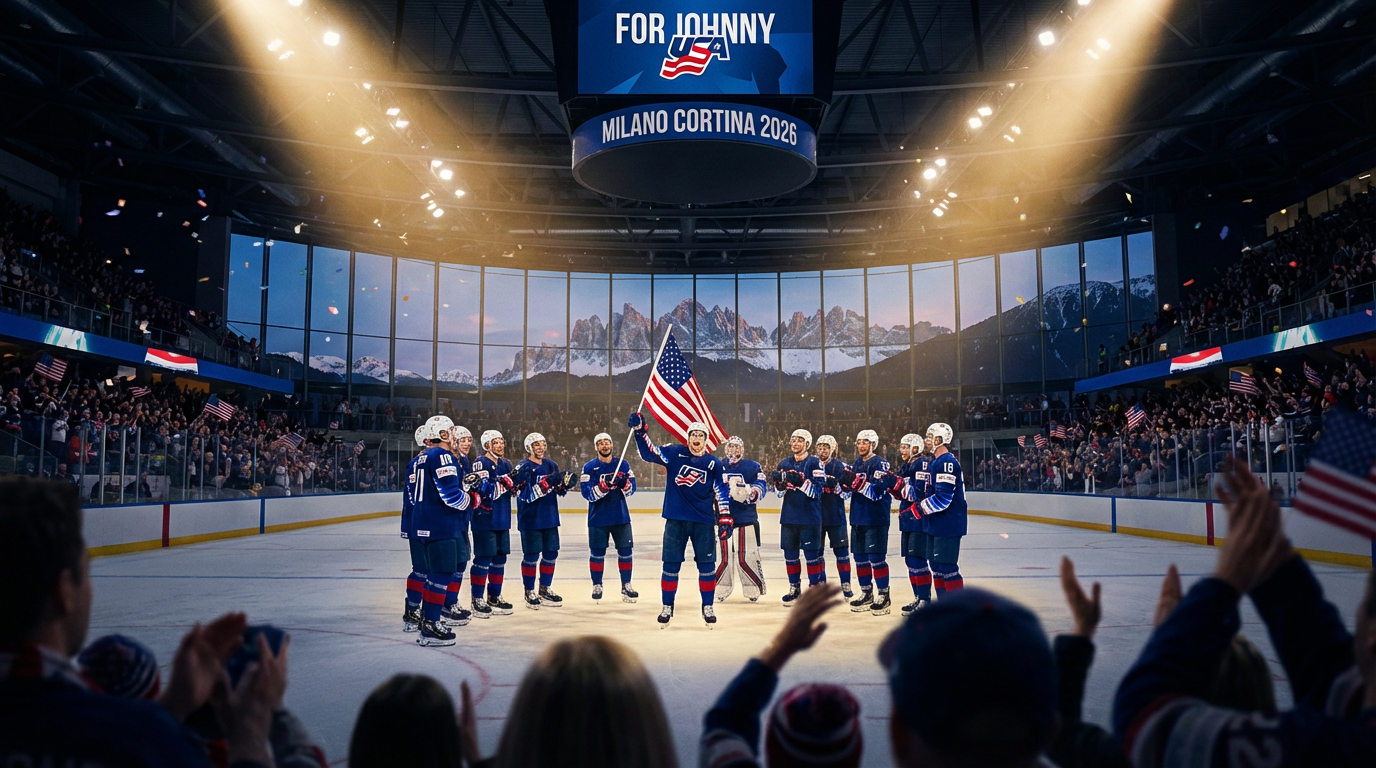
As the anthem soared—"Star-Spangled Banner" vibrating the rafters—the Dolomites stood sentinel. Jack and Quinn, arms linked, medals glinting, embodied pursuit of perfection. Not jingoism, but the raw thrill of human limits pushed. Team USA's 33 medals? This one gleamed blood-red.
"Gold tastes sweeter when shared with family. Quinn's my rock; now the world's watching brothers bleed blue." — Jack Hughes
In Cortina's eternal frost, the Hughes legacy endures: ice conquered, gold claimed, brothers immortal.