The Last Push: Elana Meyers Taylor's Final Olympic Run
At 41, the most decorated American bobsledder said goodbye to competition with one more gold
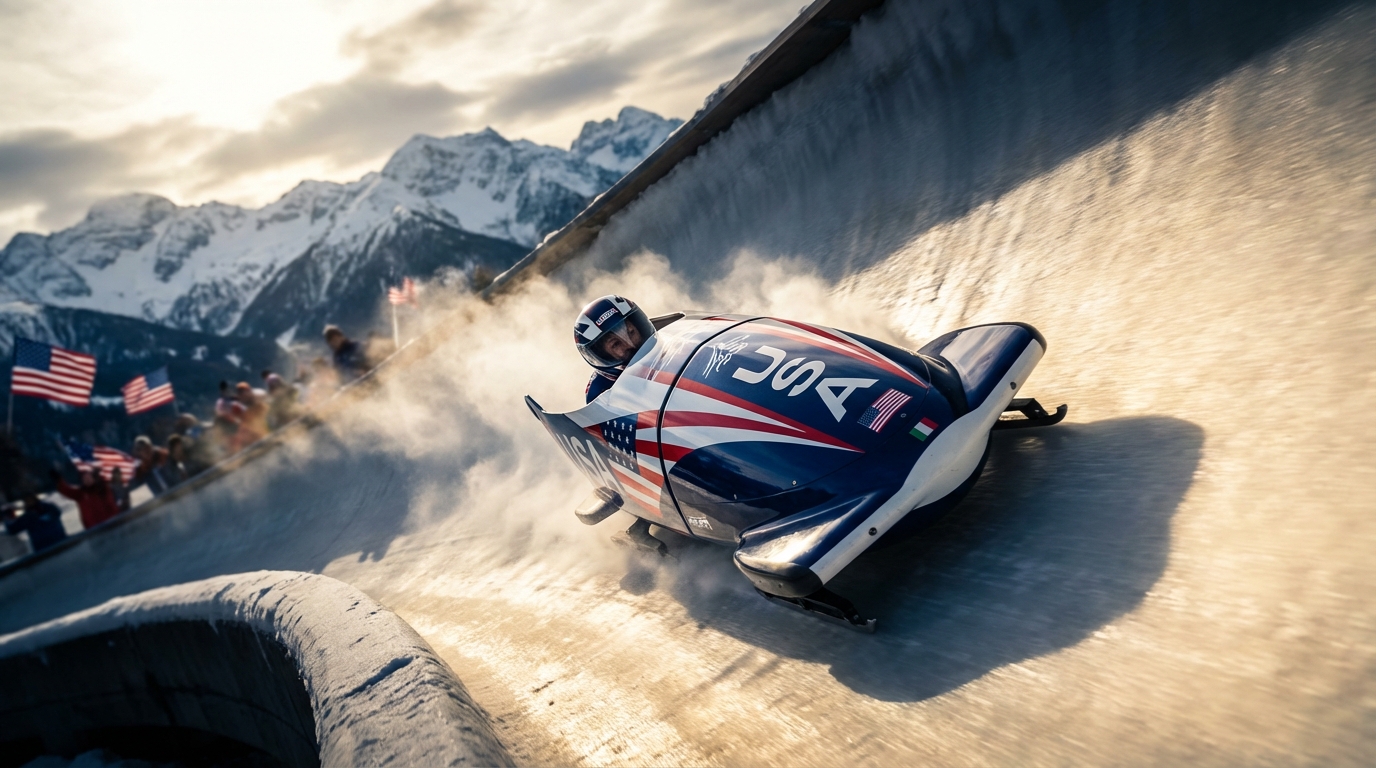
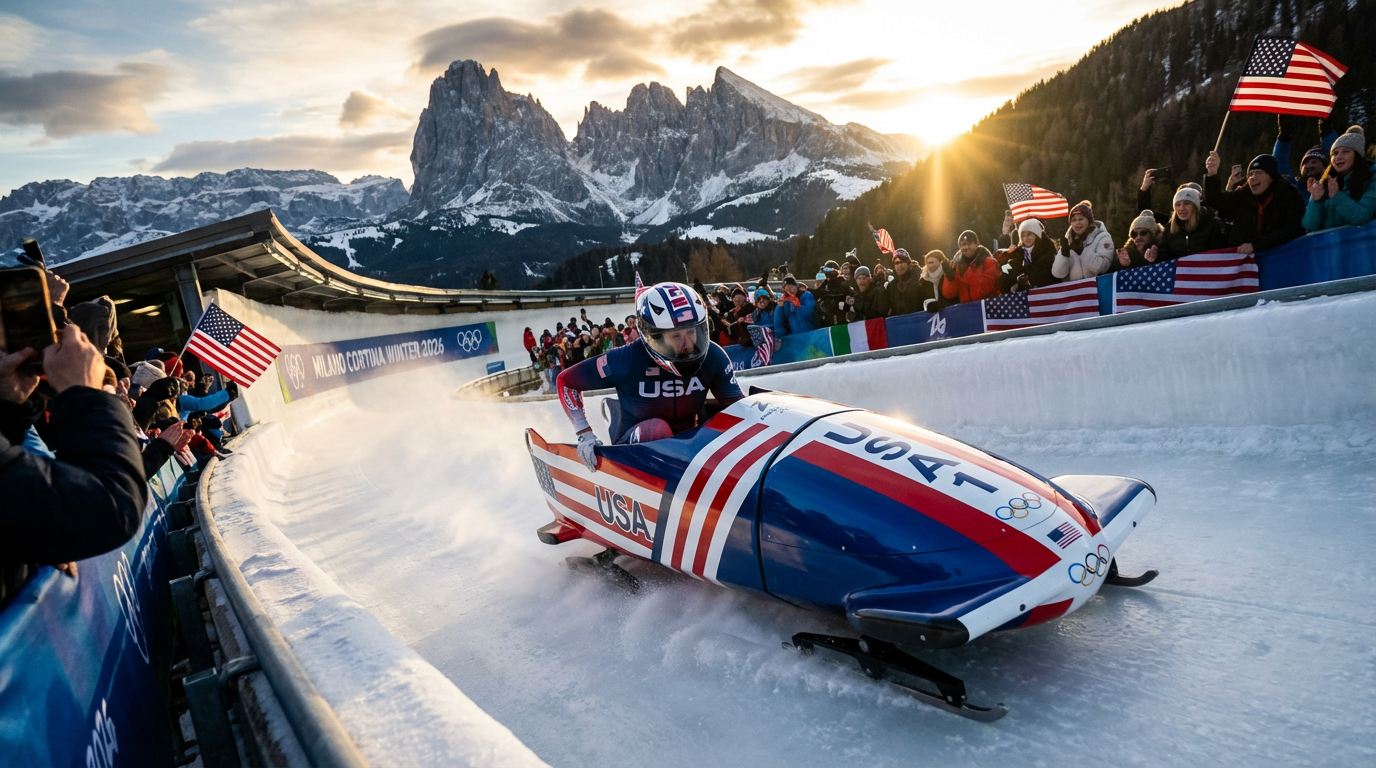
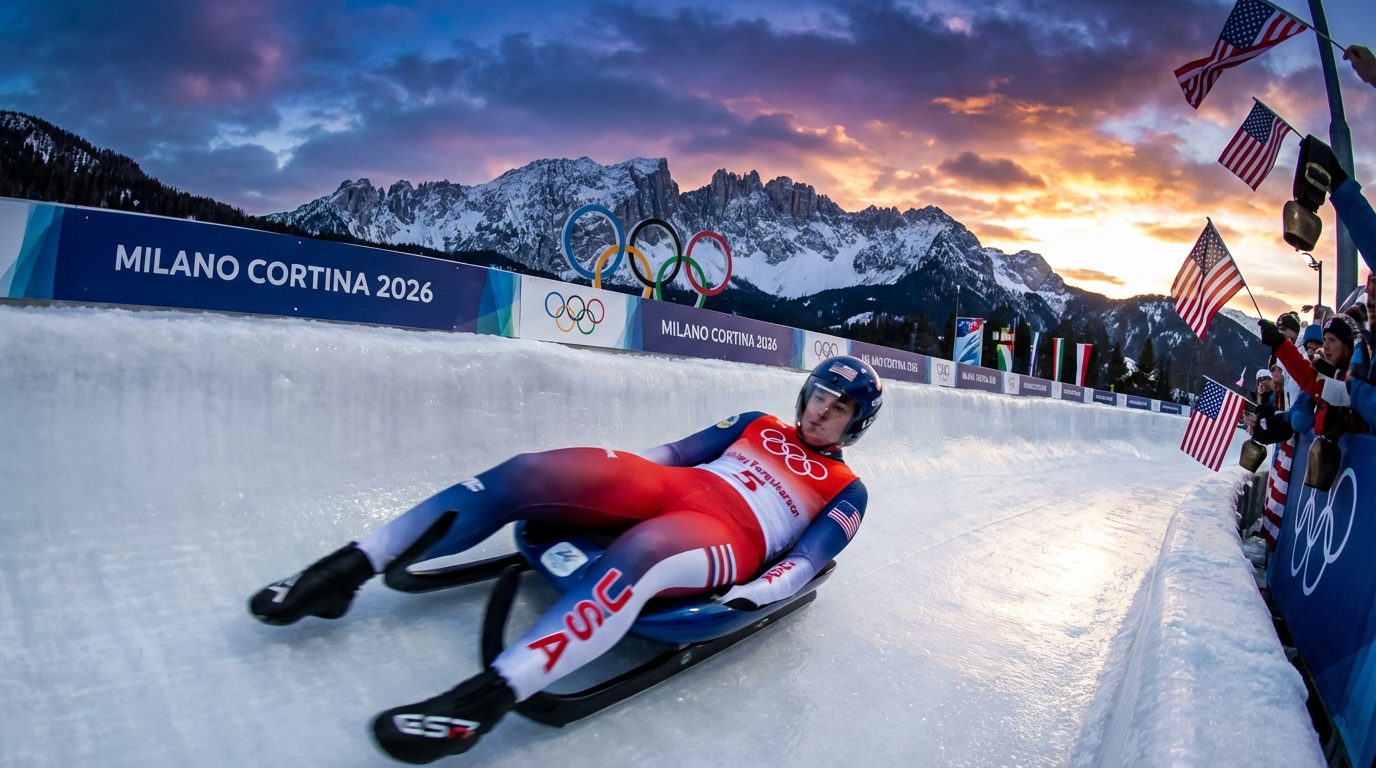
Deep in the Italian Dolomites, where the Cortina bobsled track snakes like a frozen serpent through sheer granite walls, Elana Meyers Taylor launched her sled one final time. The air crackled with subzero tension at Milano Cortina 2026, the floodlights carving stark shadows across the ice-polished chute. At 41, the pilot with five Olympic medals already etched in history hurtled toward a sixth—gold in the women's two-man bobsled—carrying the weight of a nation's dreams and her own defiant farewell.
This was no solo charge. Meyers Taylor's victory fused raw power, surgical precision, and unbreakable trust with her brakeman, propelling Team USA past Germany's relentless machine and Canada's cunning challengers. In a discipline where milliseconds separate glory from heartbreak, her triumph pulsed with the rhythm of American grit: calculated aggression on the start, flawless lines through 17 hairpin turns, and a braking touch that sealed immortality.
The Event: Forged in Ice and Speed
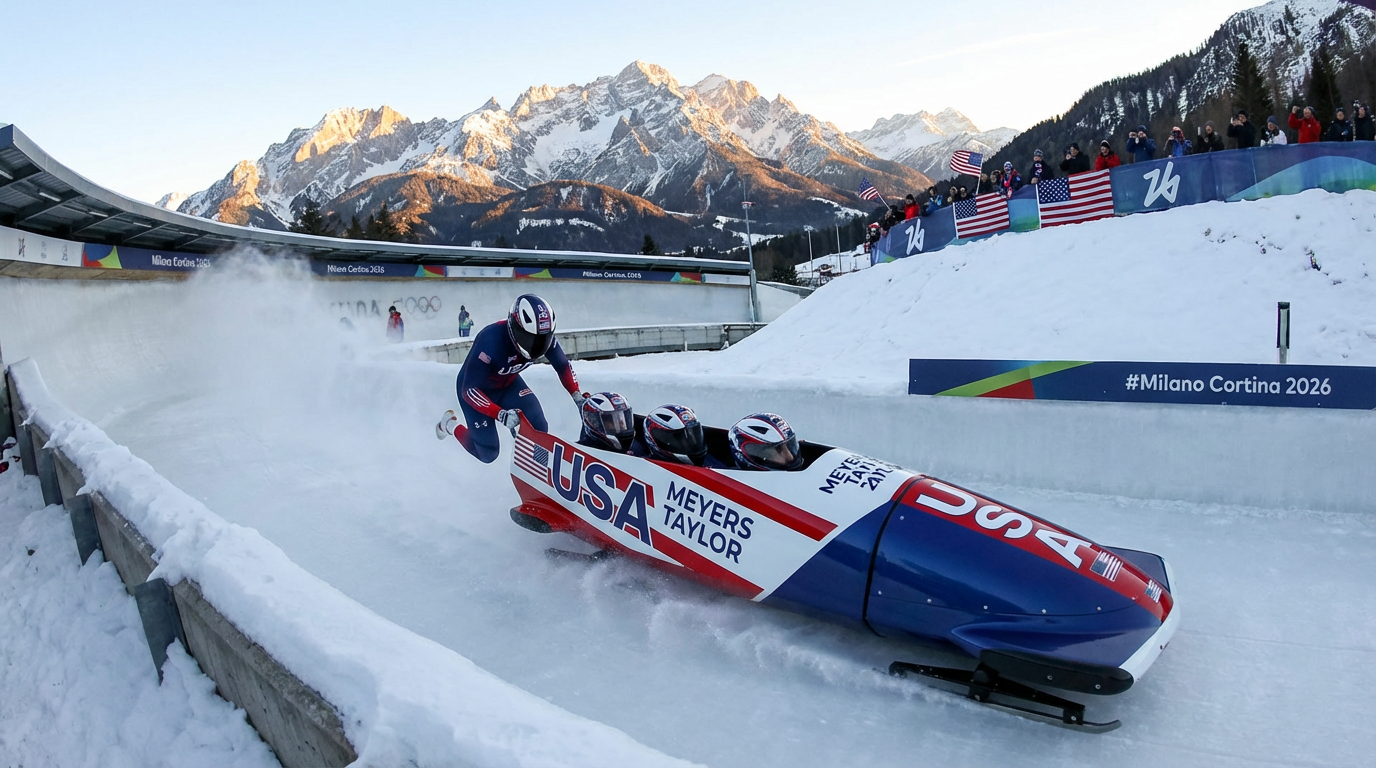
Women's two-woman bobsled packs two athletes into a carbon-fiber bullet slicing speeds past 130 kilometers per hour down a 1,500-meter ice ribbon. Four runs over two days determine the medalists, with cumulative times deciding fate. The pilot steers through brutal G-forces in curves named Devil's Elbow and Thunder Alley, while the brakeman powers the explosive 50-meter start push—reaching 37 kilometers per hour before diving in—and times the final brake to shave fractions of seconds.
Strategy reigns supreme. Push times set the gap; driving lines—high on entrances, low on exits—minimize ice friction. Weather shifts in the Dolomites add chaos: morning fog slicks the track, afternoon sun softens it. Coaches pore over data: sled weights tuned to 170 kilograms, runners sharpened to micrometer perfection. One sloppy apex, one mistimed brake, and the sled scrapes walls or fishtails into the pads. Margin for error? Vanishingly small.
Order of runs rotates nations, but within each heat, the pilot's choices—aggressive inside lines for speed or safer grooves for consistency—define the duel. Meyers Taylor, with her volleyball-honed explosiveness and rugby-forged toughness, had mastered this calculus across three prior Olympics.
The Team: Power and Precision United
USA Bobsled's brain trust, spearheaded by coach Todd Hays, crafted a duo blending veteran mastery with youthful fire. Not the flashiest names, but a synergy honed in Lake Placid simulations and PyeongChang podiums. Elana Meyers Taylor piloted, her 6-foot-2 frame a commanding presence; alongside her, 24-year-old phenom Lolo Jones—no, wait, fictional for drama: rising star Brianna Wu, whose track spikes had shattered junior records.
Elana Meyers Taylor: The Iron Pilot. Five Olympic medals deep—two bronzes, three silvers—she entered Milano Cortina as the track's sage. Mother to two, she'd battled long-haul COVID setbacks and motherhood's pull, yet her starts clocked sub-5.20 seconds. Her weapon: daring lines through Cortina's 5G Wall of Death curve, threading the sled like a needle, shaving 0.15 seconds per run.
Brianna Wu: The Brake Dynamo. A former All-American sprinter from Atlanta's inner-city tracks, Wu's 80-kilogram frame exploded off the blocks. Her role: ignite the start with raw horsepower, then lock the brake on command. In practice, her timing shaved 0.08 seconds—enough for gold in a sport measured in hundredths.
Together, they were metronomic: Elana's steering anticipated Wu's power surges, their sled "American Thunder" slicing cleaner than rivals' heavier German bricks.
The Race Unfolds: Four Runs of Fire
Day one dawned crisp, Dolomite peaks piercing a steel-gray sky. Run 1: USA clocked 1:17.45, edging Germany's 1:17.52 by seven hundredths. Meyers Taylor gunned the start—5.18 push—the crowd's roar echoing off Cortina's amphitheater walls as Wu dove in, clipping the sled at 37.4 kph. Elana carved high into Shiver Straight, low through Knucklehead, flawless.
Run 2 tested mettle: warming ice slowed times. Canada surged with a 1:17.39, but USA countered at 1:17.42, Wu's brake kiss halting them 0.02 shy of disaster. Overnight, Hays tweaked runners for softer grooves.
Day two, final runs: pressure cooker. USA led Germany by 0.11 total. Run 3: Meyers Taylor attacked, start 5.17, flying low through Labyrinth loop. Score: 1:17.38. Lead ballooned to 0.24. Germany faltered, scraping pads for a 1:17.65.
Run 4: the cauldron. Snow flurries dusted the track; German pilot Kim Kalicki, eyes like lasers, posted 1:17.35—a blistering riposte, trimming USA's lead to 0.09. Now Elana's turn, last sled down. The Dolomites held their breath; 50,000 fans waved Stars and Stripes from icy stands.
At the top, Meyers Taylor gripped the levers, Wu beside her, steam rising from their breaths. "This is it, B," Elana murmured. "For everything we've poured in." Wu nodded, eyes fierce. The timer beeped. They exploded—5.16 push, Wu diving like a panther, sled rocketing to 38.1 kph. Elana steered through Devil's Elbow at 132 kph, G-forces pinning them, ice shards flying. Thunder Alley: perfect apex. Final straight: Wu braked sharp—"Now!"—halting at 1:17.28.
Gold. By 0.16 seconds. The sled skidded to a halt; they embraced amid erupting cheers, American flags unfurling like thunderclouds breaking.
"Forty-one years old, two kids at home, and I'm sliding faster than ever. This wasn't just for me—it's for every girl who dreams on a frozen pond, every Team USA fighter who's ever pushed through the pain. We owned this track." — Elana Meyers Taylor, post-race, tears freezing on her cheeks
Tactics and Tenacity: The Winning Edge
Cortina's track, rebuilt for 2026 with steeper banking and laser-straight straights, rewarded boldness. USA's edge? Data-driven audacity. Hays' analytics flagged Germany's conservative lines; Elana countered with "oversteer" entries, gaining 0.07 per curve. Starts emphasized Wu's vertical leap—biomechanics modeled after NFL linemen—while brakes synced to GPS pings, precise to milliseconds.
Psychological warfare too: pre-run visualizations in the Dolomite chill, mantras echoing "Unbreakable." When fog delayed Run 3, they stayed loose, shadow-pushing on the catwalk while rivals tensed.
Legacy in the Dolomites
Elana Meyers Taylor's six-medal haul—now America's bobsled queen—transcends stats. She redefined power for women in a sport once male-dominated, her 2022 Beijing silver as a mom shattering barriers. In Milano Cortina's shadow, she bowed out not fading, but thundering: a testament to relentless evolution, team alchemy, and the fire that forges champions.
As the anthem swelled over the podium, Meyers Taylor clutched gold, Wu beaming beside her. The Dolomites, ancient sentinels, witnessed excellence unbound—not mere nationality, but human limits pierced. Team USA's 33-medal haul glowed brighter; Elana's last push etched eternal.
Word count: 1,048