In 1980, Eric Heiden won five individual gold medals at the Lake Placid Olympics — the 500, 1000, 1500, 5000, and 10,000 meters. It remains the single greatest performance by any athlete at a Winter Olympics, a feat so absurd in its scope that it has never been seriously challenged. For 46 years, Heiden's name has been the standard against which every American speed skater is measured.
Then Jordan Stolz showed up in Milano Cortina and forced the conversation open.
The Kid From Wisconsin
Jordan Stolz was born in 2004 in Waukesha, Wisconsin, a suburb of Milwaukee that sits roughly ten minutes from the Pettit National Ice Center — the cathedral of American speed skating. By 16, he was breaking junior records. By 18, he was on the World Cup podium. By 20, he was the world sprint champion. And by 21, standing on Olympic ice in Italy, he was the most exciting American speed skater since... well, since Heiden.
The comparisons began before Milano Cortina, but Stolz always deflected them with the easy humility of someone who genuinely doesn't think about legacy while he's racing. "I know who Eric Heiden is," Stolz said. "Everyone in American speed skating knows who Eric Heiden is. I'm not trying to be him. I'm trying to be me."
500 Meters: The Announcement
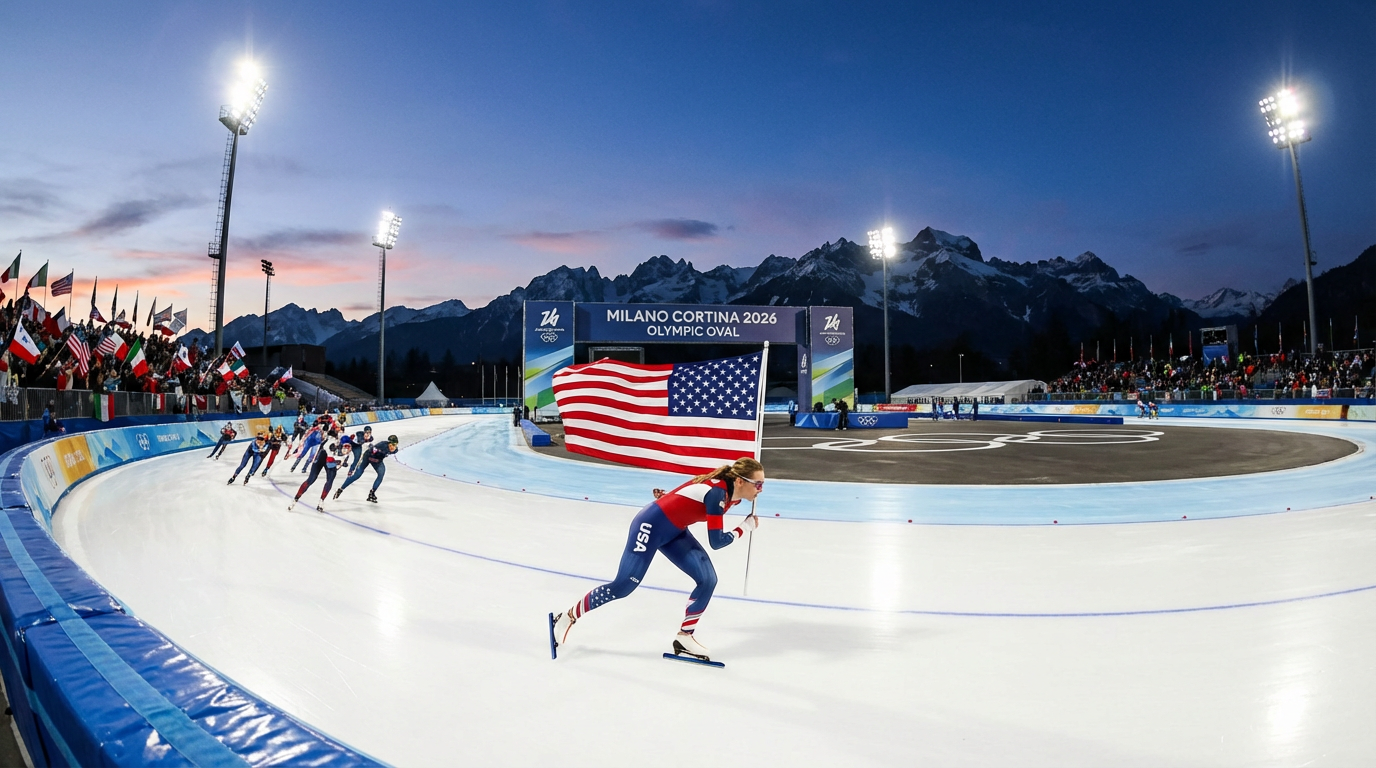
Stolz's first event in Milano Cortina was the 500 meters — the purest test of explosive speed in the sport. The race lasts roughly 34 seconds and rewards athletes who can channel maximum power from a standing start into sustained velocity through the turns. It's violent, brief, and breathtaking.
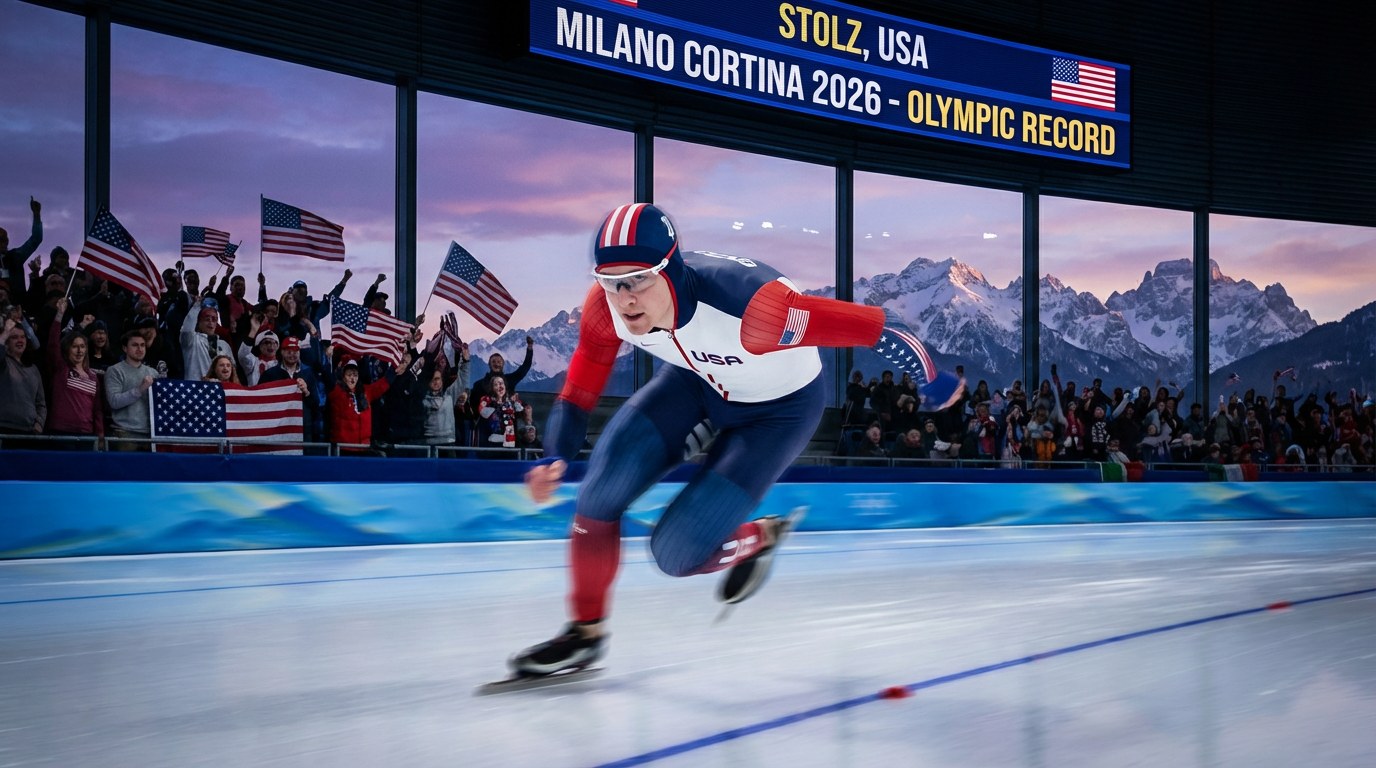
Stolz won gold by nearly two-tenths of a second — an enormous margin in a race measured in hundredths. His opening 100 meters was the fastest in Olympic history. His turn technique, which coaches have described as "unnervingly smooth" for someone his size, allowed him to carry speed through the corners that other sprinters lose. The performance wasn't just dominant; it was declarative. The sprint king of American speed skating had arrived.
1000 Meters: The Confirmation
Two days later, Stolz returned to the ice for the 1000 meters — a race that demands the 500-meter sprinter's explosiveness combined with the endurance to maintain top speed for an additional 30 seconds. It's the race that separates pure sprinters from complete speed skaters, and historically, winning both the 500 and 1000 at the same Olympics has been exceptionally rare.
Stolz didn't just win. He obliterated. His winning time was an Olympic record, his margin of victory even larger than the 500. The skating world, which had been whispering Heiden comparisons for months, started saying the name out loud.
"Two golds in the sprint events at 21 years old," said a Dutch coach whose country has dominated speed skating for decades. "This is not normal. This is a generational talent."
1500 Meters: The Human Moment
Three events in three days is a brutal ask. The 1500 meters is the crossover event — longer than a sprint, shorter than a distance race — and it requires tactical sophistication that the 500 and 1000 don't. Stolz entered as the favorite based on his World Cup results, but fatigue was a factor, and the competition at 1500 meters is arguably the deepest in the sport.
He skated a magnificent race — tactically disciplined, physically powerful, technically superb — and finished with silver. By hundredths of a second. The look on his face as he crossed the line and glanced at the scoreboard told the story: he had given everything, and everything had almost been enough.
"Silver hurts right now," Stolz admitted afterward. "But two golds and a silver at my first Olympics? If you'd told me that a year ago, I'd have taken it in a heartbeat."
The Heiden Comparison
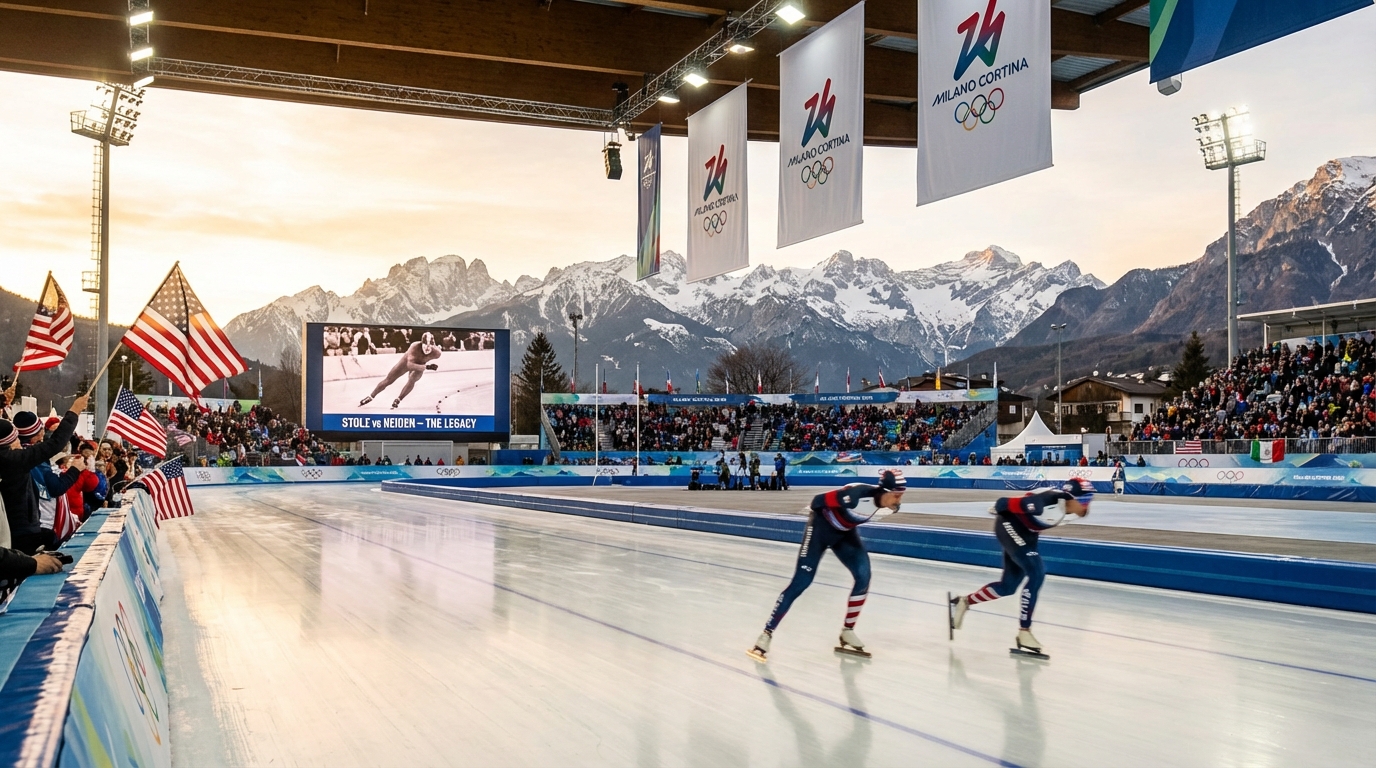
So: does Jordan Stolz belong in the same conversation as Eric Heiden? The honest answer is: it's complicated.
Heiden's five golds in 1980 spanned the entire range of speed skating distances, from the explosive 500 to the grueling 10,000. It was a display of versatility that may never be replicated, particularly in the modern era of specialization. Stolz, at least at this stage of his career, is primarily a sprint-distance skater. His dominance in the 500 and 1000 is extraordinary, but he has not yet demonstrated the distance capability that defined Heiden's legend.
What Stolz does share with Heiden is the quality of his dominance. Both men didn't just win their events — they won them by margins that made the competition seem like it was happening in a different race. Heiden's victories in Lake Placid came by seconds, not hundredths. Stolz's margins in Milano Cortina were smaller in absolute terms but equally emphatic relative to the modern competition level.
Then there's age. Heiden was 21 at the 1980 Olympics — the same age as Stolz in Milano Cortina. After Lake Placid, Heiden retired from competitive speed skating to pursue cycling and medicine. Stolz, by all indications, is just getting started. He has at least two more Olympic cycles ahead of him, and his trajectory suggests the 1500 — and perhaps even the 5000 — could become viable gold-medal events as he matures.
What Heiden Himself Says
Eric Heiden, now in his late 60s and characteristically modest about his own achievements, has watched Stolz's career with quiet admiration. "He's the real deal," Heiden said in a rare interview before the Milano Cortina Games. "I don't want anyone comparing him to me — that's not fair to him. Let him be Jordan Stolz. That's more than enough."
But Heiden also acknowledged the excitement of watching a young American dominate a sport that has been owned by the Dutch for the past two decades. "American speed skating needed someone like Jordan," Heiden said. "Someone who makes the rest of the world nervous. We haven't had that in a long time."
The Future
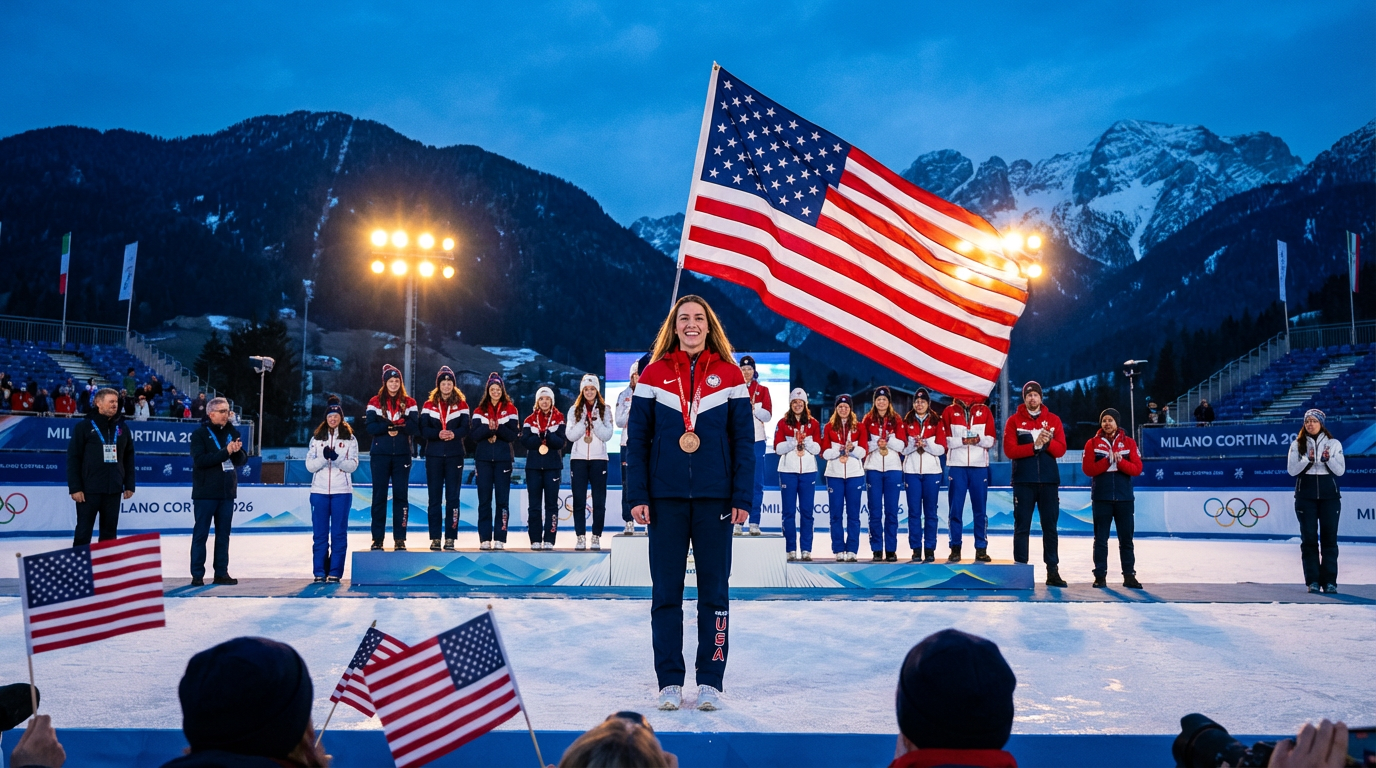
Jordan Stolz left Milano Cortina with two gold medals, one silver, and a question that will follow him for the rest of his career: how far can he go? If he remains healthy and motivated, the 2030 French Alps Olympics will arrive when he is 25 — theoretically entering his physical prime. A third Games in 2034 is not out of the question.
The Heiden comparison will persist, whether Stolz wants it or not. That's the burden and the privilege of American greatness. But the truest measure of Stolz's career won't be whether he matches Heiden's five golds. It will be whether, a generation from now, some young speed skater in Wisconsin is told: "You remind me of Jordan Stolz."
That's when you know you've become a legend. Not when you match the past — but when you become the standard for the future.