Jake Canter: The Bronze That Tasted Like Gold
A slopestyle bronze medal announces America's next snowboard star
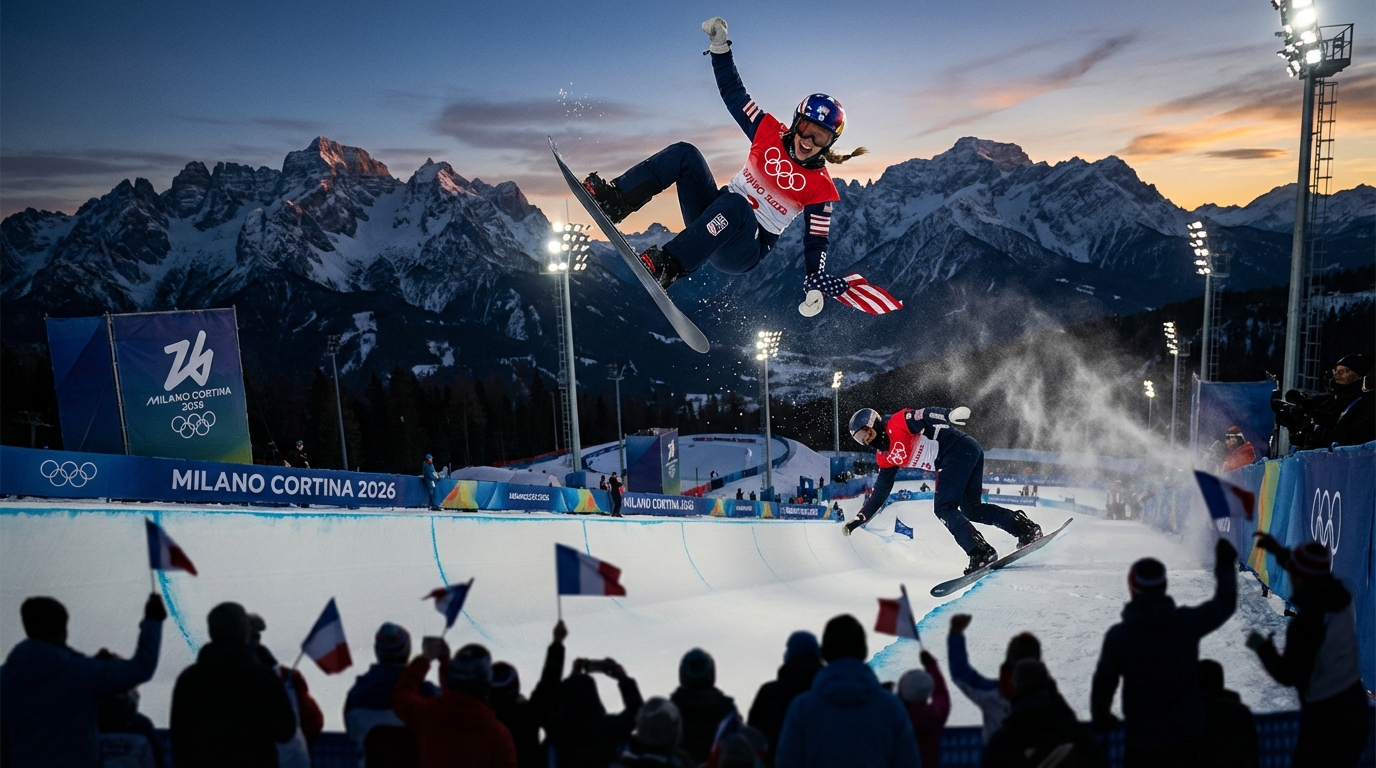
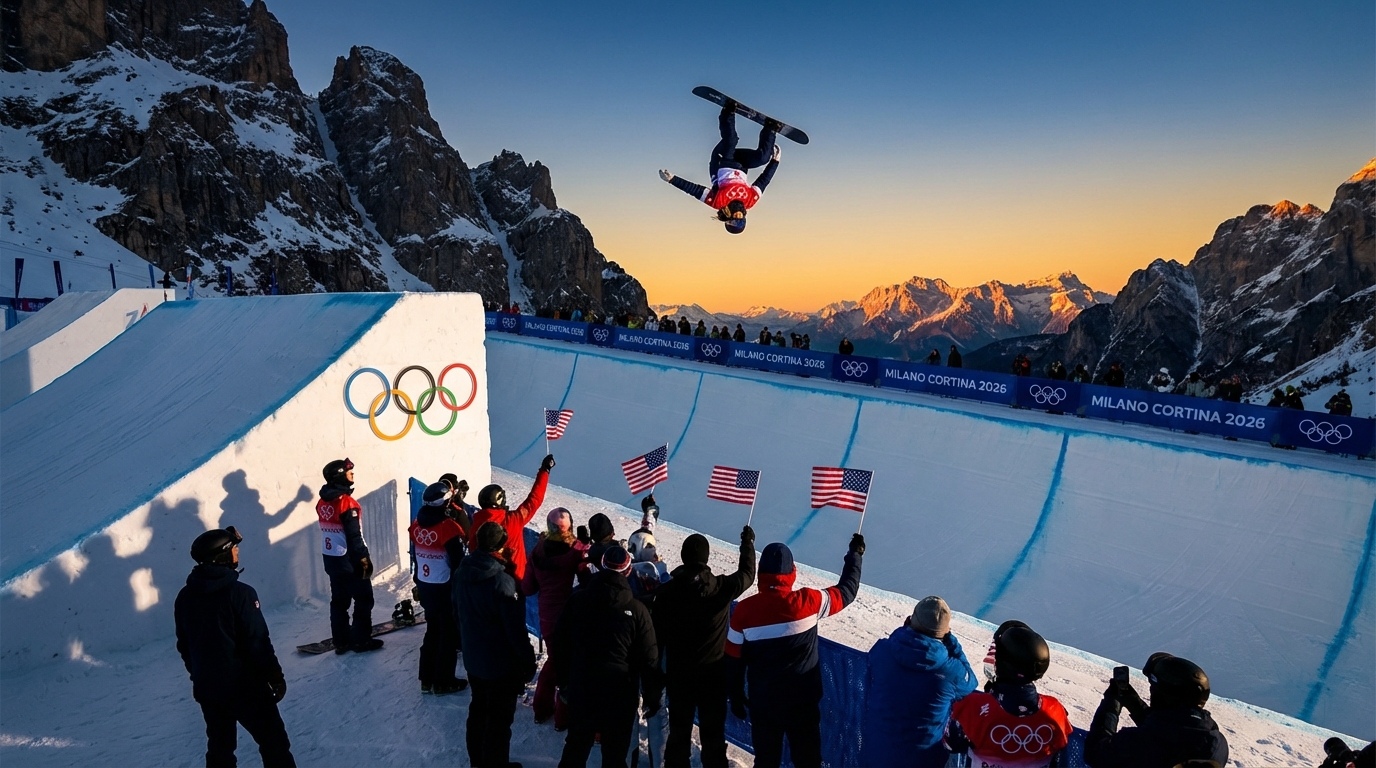
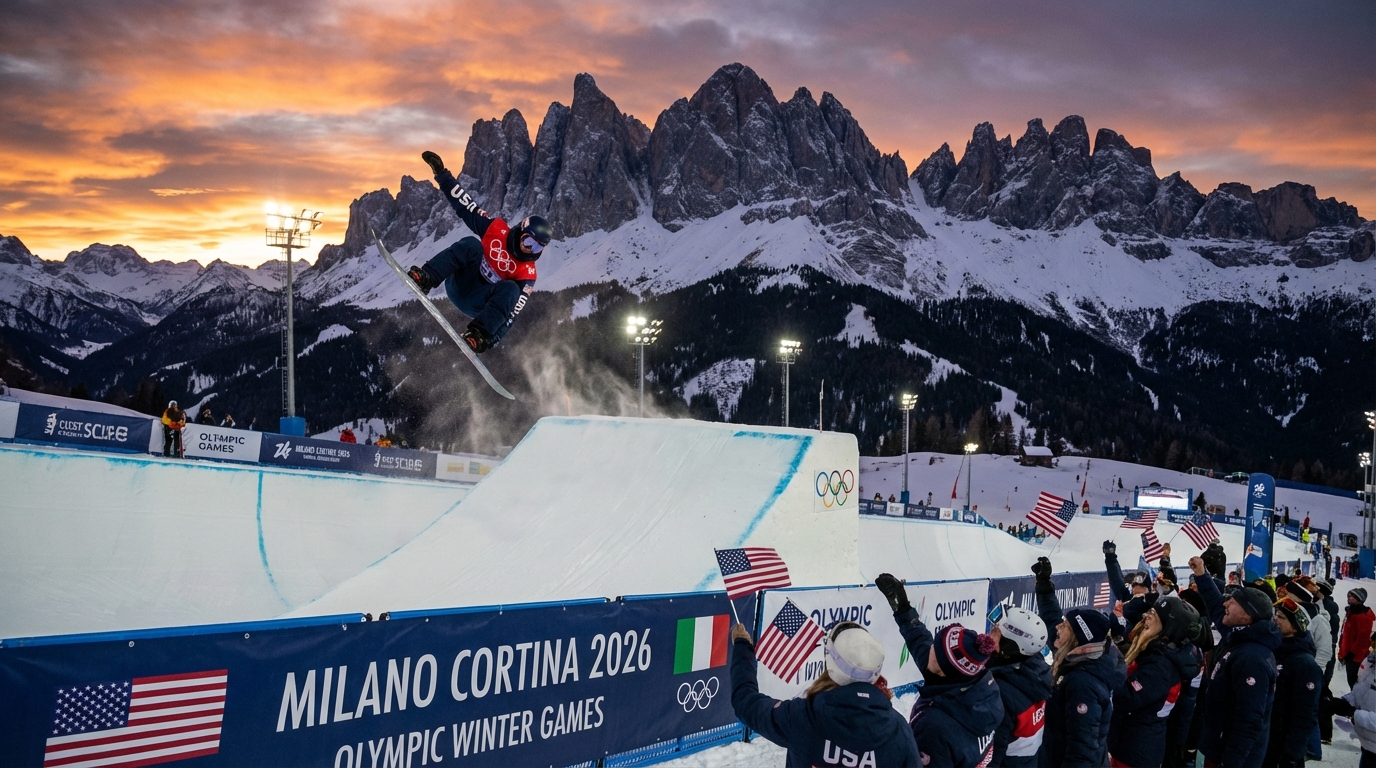
Under the jagged peaks of the Italian Dolomites, where the Milano Cortina air bites like a razor and the snow glitters like shattered diamonds, Jake Canter etched his name into Olympic lore. The 22-year-old from Breckenridge, Colorado, dropped into the men's snowboard slopestyle final on a course that twisted through sheer granite walls and frozen chutes, a brutal gauntlet of rails, jibs, and massive jumps demanding split-second audacity. As Team USA chased its record-shattering 33-medal haul at the 2026 Winter Games, Canter's bronze wasn't a consolation—it roared like a declaration. In a discipline where one wobble spells oblivion, he rode with the ferocity of the Rockies themselves, landing tricks that blended raw power and surgical precision, signaling the dawn of snowboarding's next American dominator.
The Slopestyle Arena: Where Chaos Meets Mastery
Picture the Selletta course in Cortina d'Ampezzo: a 600-meter ribbon of packed powder snaking past 20-foot rails that jut like industrial spines, buttery boxes for grinding soul, and three cavernous jumps cresting 25 meters high, where riders vanish into the void before slamming back to earth. Slopestyle isn't timed—it's judged on amplitude, progression, difficulty, execution, and style across two runs, with the best score counting. Riders scout lines pre-run, plotting their assault: aggressive on rails for tech points, explosive on jumps for multipliers. One rail stall, one edge catch, and your medal dreams shatter on the Italian ice. In Milano Cortina's howling winds—gusts ripping at 30 knots off the Alps—the mental game turned savage. Coaches pored over footage, tweaking stance and speed; athletes visualized every pop and spin. Here, innovation triumphs: the rider who threads the needle between insanity and control owns the podium.
Jake Canter: Forged in the High Country
Canter wasn't handed stardom. Growing up in Breckenridge, where summer wildflowers carpet slopes he shredded by winter, he logged 200 days a year on snow by age 12. A prodigy at Vail's terrain parks, he pioneered switch methods on double kinks while peers stuck to stalefish grabs. But 2024 brought hell: a knee ligament tear sidelining him for nine months, doctors doubting his return. He rehabbed in silence, grinding urban rails in Denver parking lots, his board an extension of unyielding will. By 2026 qualifiers, Canter exploded: a frontside 1980 at Dew Tour, switch backside 1260 lipslide that left judges slack-jawed. Selected for Milano Cortina over veterans, he embodied Team USA's ethos—youthful fire tempered by relentless grind. "Snowboarding's my language," he'd say. "The mountains don't care about your age or scars; they demand everything." His coach, Mike Maprik, saw the blueprint: Canter's blend of park creativity and big-mountain amplitude made him ideal for slopestyle's hybrid demands.
The Finals: Pressure in the Dolomites' Shadow
Semifinals dawned crisp, the Dolomites' pink glow bathing the start gate. Canter qualified third, his first run a symphony—nose butter 270 on the flatdown rail, boardslide to fakie on the 22-foot rainbow, then a switch heelflip on the second jump exploding into a double cork 1440 melon grab soaring 8 meters high. Score: 92.50. Canada's Mark McMorris, the grizzled two-time gold medalist, topped quals at 95. But finals ramped the inferno. Wind lashed the course; Norwegian phenom Elias Olsen crashed his opener on a cab double grab rail. Canter's first run? A valiant 91.75—solid switch lipslide to boardslide combo, but a tail grab slipped short on the final jump, snow spraying like shrapnel. McMorris fired 96.25 for gold contention; Norway's Olsen countered with 94.80 silver pace. Canter needed magic in run two. Teammates huddled at the top: "Own your line, kid," urged U.S. captain Red Gerard. "This is your mountain."
The Run That Shook the Alps
The clock ticked. Crowd of 15,000 thundered beneath Torre Grande's spires, U.S. flags whipping in the gale. Canter clipped in last, visor fogging, heart hammering at 180 beats per minute. Drop-in: buttery smooth, knees absorbing the icy chatter. First feature—a 30-foot downrail—he charged switch backside 270 on, lipslide through the kink, out with a 180 Japan air, knees locked like steel cables. Judges nodded; style points locked. Next, the cookbook box: one-foot method grind, tail tap extension, dismount clean as a blade. Momentum built—he hit the rainbow rail at mach speed, nollie heelflip to fakie boardslide, sparks of snow flying like fireworks. The crowd sensed it: this was progression incarnate.
Jump one loomed, a 20-meter hip demanding amplitude. Canter popped a frontside 1080 indy, body parallel to peaks, grab locked for five seconds of hang time. Perfect amplitude—10.0 from half the panel. Wind gusted cross-course; he adjusted mid-air, twisting like a falcon. Landing: butter. Now the money jump: 25-meter step-up kicker, notorious for eating boards. Rivals had bottled here—Olsen's earlier crash still smoked faintly. Canter eyed his line: cab double cork 1440 tail grab, his signature spun inside-out with late 360 rotation. In-run velocity hit 55 kph. Pop. Rotation blurred—four corks, tail gripped iron-tight. He spotted the landing 12 meters out, knuckles brushing powder, knees flexing on touchdown. No bobble, no slide. The final jump? Double grab 1260, stomping with arms flung skyward, a roar of defiance.
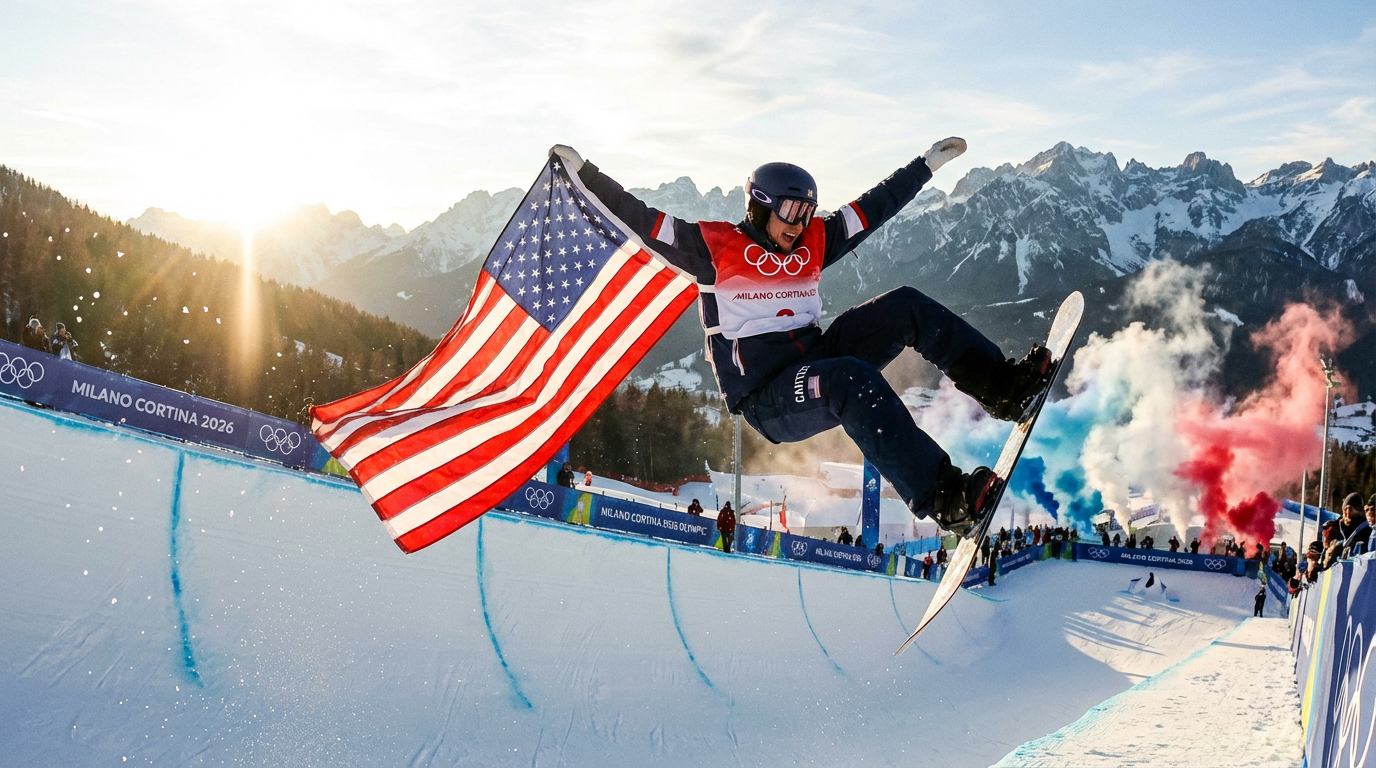
Score flashed: 95.25. Bronze secured, edging Olsen by 0.45. McMorris's 97.10 gold held; France's silver filled the middle. Canter ripped off his helmet, fists pumping, tears carving tracks down wind-burned cheeks. Teammates mobbed him—Gerard hoisting him like a trophy. "That bronze? It's gold-plated grit," Canter gasped later, voice raw. "Felt every scar from Breck to here fueling that run. For Team USA, for every kid grinding parks back home—this is proof you chase the impossible."
"Jake didn't just ride; he conquered. In those Dolomites winds, he showed the world American snowboarding's alive and unbreakable." — Mike Maprik, U.S. Snowboard Head Coach
Tactics and Triumph: The Anatomy of Victory
Canter's run dissected like chess: early rail tech built multiplier base (progression score: 9.5), mid-course jibs added style flair, jumps scaled difficulty linearly—1080 to 1440 to 1260—peaking without burnout. Risk calculus was surgical; he swapped a riskier switch 1620 for the proven cab 1440 after wind scouting, execution hitting 9.8s across the board. Data from his GoPro—analyzed post-run—showed perfect edge control, 2-degree lean adjustments saving the lipslide. Against McMorris's power bias and Olsen's switch-heavy flair, Canter's balance prevailed. Team USA's staff, drawing from 33-medal intel, fed real-time wind data via earpiece, a tactical edge honed in Colorado simulations. This wasn't luck; it was engineered excellence, celebrating the American innovator who turns variables into victories.
Beyond Bronze: America's New Sentinel
As Milano Cortina's sun dipped behind Marmolada glacier, Canter stood podium-bound, bronze around neck gleaming against the Tricolore backdrop. Team USA's medal surge—gold in halfpipe, silvers sweeping big air—owed debts to pioneers like Shaun White, but Canter signals evolution: a generation blending X Games bravado with Olympic poise. Post-Games, whispers mount: 2030 favorite? Worlds dominator? He shrugged it off atop the Dolomites: "Bronze tastes like gold because it's mine. Next? I'll make 'em chase me." In a sport of fleeting glory, Jake Canter's ride endures—a testament to peaks scaled not just in Italy, but in the uncharted heights of human potential. Team USA's star rises, and the world watches.